
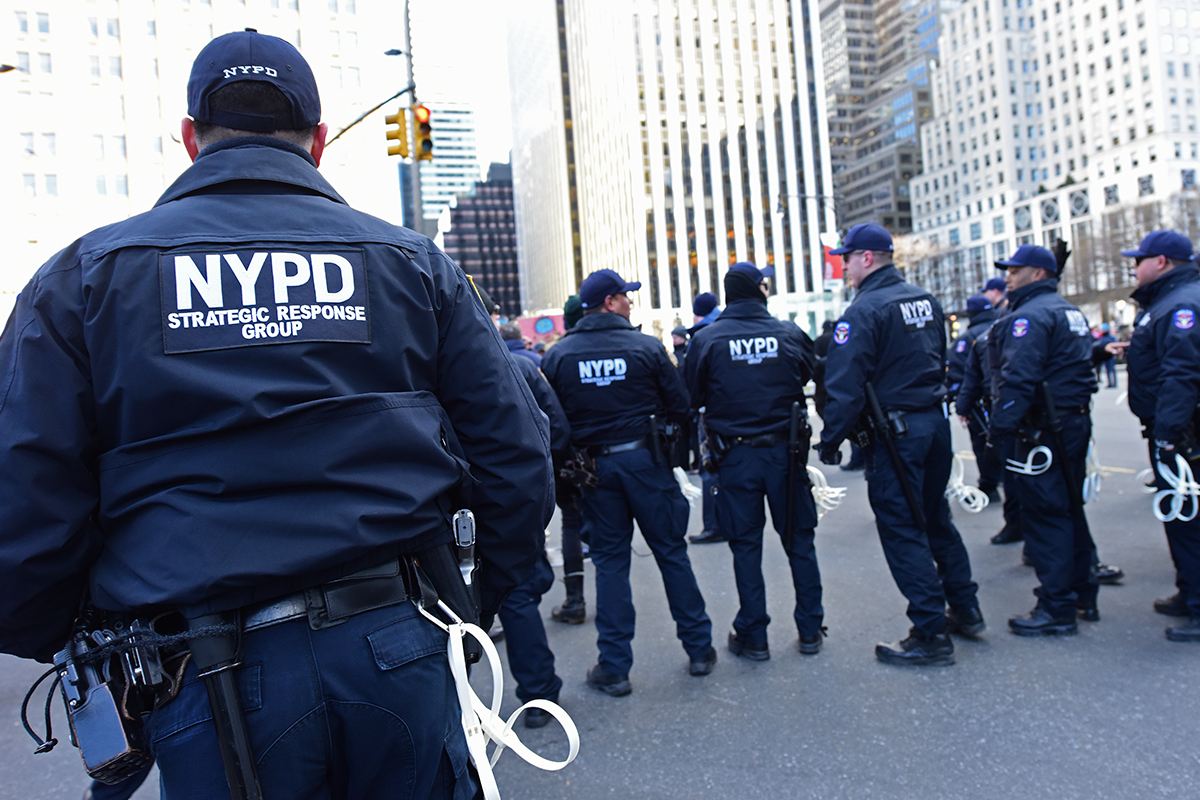
The mayor is preparing to eliminate a specialized police unit responsible for responding to dangerous demonstrations. The decision fulfills a major demand from his socialist allies, but raises questions about who will protect New Yorkers when protests turn threatening or violent.
New York City Mayor Zohran Mamdani is preparing to dismantle the NYPD's Strategic Response Group (SRG), a specialized unit responsible for counterterrorism operations, large-scale demonstrations and responding to potentially violent civil unrest.
According to a November 12 report from POLITICO, the announcement could come as early as Friday, just ahead of a major convention of the New York City Democratic Socialists of America (DSA), which has made eliminating the unit a political priority.
The timing is significant. Mamdani campaigned on disbanding the SRG, and pressure from socialist activists and allied elected officials has intensified throughout his administration.
What happens when protests turn violent?
Established in 2015, the Strategic Response Group has provided specialized officers trained to respond to large demonstrations, potential terrorist threats and dangerous crowd situations.
Its responsibilities have included intervening when demonstrations escalate beyond peaceful assembly.
The unit has also faced serious criticism over excessive-force allegations, particularly during the 2020 Black Lives Matter protests. A 2023 legal settlement imposed restrictions on its deployment and crowd-control tactics.
Mamdani argues that responding to peaceful demonstrations and combating terrorism should be separate police responsibilities.
But dismantling the SRG raises an important operational question: What happens when a peaceful demonstration becomes an immediate threat to the people around it?
Under one proposal reportedly being considered, civilian personnel would take the lead in managing demonstrations, emphasizing de-escalation. NYPD officers would remain nearby and could intervene to make arrests when necessary.
Critics have questioned whether a civilian-led response can act quickly enough when demonstrators threaten businesses, block access to buildings or intimidate people attempting to exercise their own constitutional rights.
What about Jewish New Yorkers?
The public safety concerns extend beyond ordinary crowd management.
New York has experienced confrontations involving pro-Palestinian activists, Jewish community members and elected officials over the war in Gaza and American policy toward Israel.
The incident illustrates a fundamental distinction that must remain central to the debate.
Protesters have the constitutional right to criticize Israel, Palestine, elected officials and government policy. They do not have the right to assault people, make unlawful threats or violently prevent others from gathering.
For Jewish New Yorkers, Israeli-owned businesses, religious institutions and politicians who disagree with aggressive protest movements, the effectiveness of police protection is a legitimate concern.
Those concerns also apply to any other community targeted because of its identity, religion or political beliefs.
The right to protest cannot become a license to intimidate.
Political pressure from Mamdani's own allies
The proposal also arrives amid documented pressure from the mayor's political left.
In October, DSA-aligned politicians and activists called for both the SRG's dissolution and the removal of Police Commissioner Jessica Tisch.
Some accused Tisch of failing to confront federal immigration enforcement and criticized the NYPD's response to demonstrations.
Mamdani has resisted calls to fire Tisch, but his administration has reiterated its commitment to eliminating the SRG.
That sequence raises questions about the relationship between political demands and policing decisions. Are seeing political pressure accelerating a change whose public safety consequences have not yet been fully explained?
The Unanswered Questions
New Yorkers deserve clear answers about how the proposed system will work.
Who will determine when civilian de-escalation has failed? How quickly can specially trained officers intervene? Will the NYPD retain sufficient resources to protect synagogues, political gatherings, businesses and residents threatened by hostile crowds? And what safeguards will prevent political considerations from influencing police deployment?
The administration has not yet provided enough detail to answer those questions conclusively.
Supporters of disbanding the SRG point to documented misconduct allegations and argue that separating protest management from counterterrorism could better protect constitutional rights.
Critics worry that eliminating a specialized response unit without a demonstrably effective replacement could leave dangerous gaps in public safety.
Protecting Free Speech Means Protecting Everyone
The First Amendment protects peaceful demonstrations, including unpopular, offensive and deeply controversial political speech.
But that protection belongs equally to protesters, counterprotesters, religious communities, business owners and public officials.
A city cannot meaningfully protect freedom of expression if people fear attending a religious vigil, operating a business or speaking publicly because a hostile crowd may confront them.
Mamdani's administration now faces the challenge of demonstrating that its promised reforms will preserve both civil liberties and effective law enforcement.
Disbanding a controversial police unit does not automatically make protests safer. Nor does it automatically make them more dangerous. The consequences will depend on what replaces it, how officers are deployed and whether the city consistently enforces the law.
For New Yorkers concerned about political intimidation, antisemitism and escalating confrontations at demonstrations, those details matter far more than the political symbolism of eliminating the SRG.
The question is not whether New Yorkers should have the right to protest. They already do.
The question is whether City Hall can guarantee that everyone else retains the right to live, work, worship and express their beliefs without fear of violence.
