
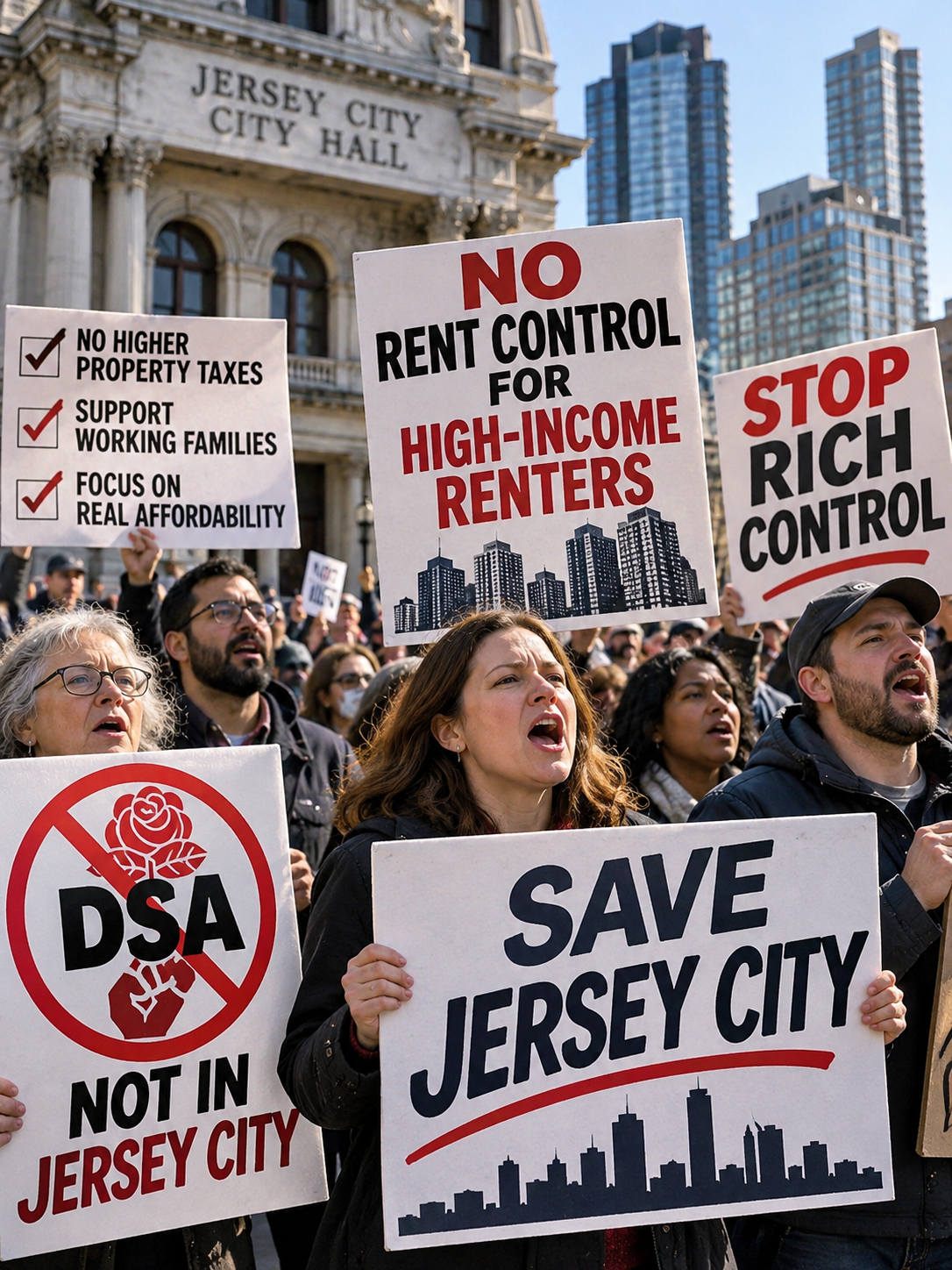
A new political battle is brewing in Jersey City as Council Members Eleana Little, Joel Brooks, and Jake Ephros face growing opposition to a controversial proposal that could bring nearly 52,000 additional apartments under rent control.
The proposal, Ordinance 26-089, is being challenged by a newly organized coalition called Save Jersey City, made up of homeowners, tenants, community leaders, and local businesses who argue that the policy could end up protecting wealthy renters while shifting financial burdens onto working families.
Critics are calling it "Rich Control."
According to the organization, the ordinance would eventually extend rent control to approximately 207 buildings containing 51,867 apartments once those properties reach 30 years of age. The figures have not been independently verified.
The controversy centers on a fundamental question: Why should Jersey City expand rent protections to luxury downtown apartments instead of prioritizing residents who are actually struggling to afford housing?
Brooks and Ephros, both DSA-backed council members, have championed affordability as a political priority. But opponents argue that their approach could discourage new housing construction, distort the rental market, and ultimately create additional financial pressure on homeowners.
Ward E homeowner Andrea Port raised concerns about rising property taxes, overcrowded schools, and the lack of a clear infrastructure plan as Jersey City continues to grow.
Community organizer Alex Gleason pointed to an earlier fight against a proposed 20% municipal tax increase, warning that residents are prepared to organize again.
Meanwhile, Eric Conner, co-founder of Better Blocks New Jersey, claims that more than 150 families in Newport face losing their homes while city leaders focus on expanding rent control to some of Jersey City's most expensive apartment buildings.
"Putting Jersey City's most expensive apartment buildings into rent control doesn't help low-income renters; it's a gift to some of the highest-earning renters in the city at the expense of some of the poorest," Conner said.
The larger concern is whether policies promoted in the name of affordability are actually making housing more accessible or simply creating new government interventions with unintended consequences.
Save Jersey City's warnings about higher taxes and reduced development remain predictions, not established outcomes. The council members' responses and their case for the ordinance were not included in the group's announcement.
But the political fight is now underway.
Jersey City residents deserve affordable housing, responsible development, and a government that understands the financial pressures facing working families.
The question facing Little, Brooks, and Ephros is whether their proposed rent control expansion will deliver those results—or protect some of the city's highest-income renters while leaving everyone else to deal with the consequences.
