

An affectionate guide to surviving political conversations, questioning revolutionary fantasies and maintaining a friendship through the inevitable debate about capitalism.
It starts innocently enough. Your friend joins the Democratic Socialists of America. Suddenly, billionaires are responsible for everything, landlords are the enemy, zionists need to be put on lists, and every conversation somehow becomes about the collapse of the American Empire.
You suggest grabbing dinner. They suggest seizing the means of production.
You still care about them. You'd just prefer that your friendship survive the revolution.
Before staging an intervention, remember that having radical political beliefs isn't a medical condition (although years of being on SSRIs may be one reason they suddenly feel that murdering capitalists is the only solution). Also remember that unemployment, loneliness and depression aren't moral failures, either. The goal is to have a conversation, not conduct an ideological exorcism.
Step 1: Invite them Outside
Find somewhere comfortable to sit. Preferably somewhere that doesn't require a Discord login or monthly membership dues to support the revolution.
Ask how they're doing. How are their relationships? What are their ambitions? What would they like their life to look like in five years?
Listen to their frustrations without immediately turning the conversation into a debate about economics. You can acknowledge that America has serious problems without agreeing on every proposed solution.
Of course, if they are like the majority of DSA members, they probably come from a well off family and are just upset that no one takes their art seriously, so keep this in mind as you try to prevent yourself from eye rolling every time the bring up how “oppressed” they are.
Step 2: Establish which Kind of Communist You're Dealing With

There is a considerable difference between wanting free healthcare and wanting the government to nationalize the entire economy and end free markets.
Ask what they actually believe about private property, democracy, entrepreneurship, freedom of speech and individual liberty.
Someone advocating for a Scandinavian healthcare isn't necessarily advocating for Soviet agriculture.
The distinction is important. Here are the differences so you know how deep into Maoist indoctrination your friend has become.
Capitalism - Private ownership and market competition. Some government controls over businesses like regulations for workers rights, safety and to prevent monopolies. Businesses are taxed to cover government programs.
Social Democracy - Market capitalism with extensive public services and welfare programs. This is where we are in America, where the majority of our taxes go towards social programs. Poverty has been functionally eradicated and people are able to create businesses which allow for social mobility.
Democratic Socialism - Democratic governance with greater social ownership of the economy. This is what most of the DSA leadership wants their members to believe they are aiming for, while ignoring the theocratic Islamists who actually lead the organization.
State Socialism - Extensive state ownership and economic planning. At this point all hope is lost and this is the system that has bankrupted South American states like Venezuela and Brazil. The main reason we have an immigration crisis in the West is because of the failures of state socialism which forces people to flee to capitalist societies.
Communism - In theory, a classless society with common ownership of productive resources. In reality, the final step of socialism in which politicians and billionaire oligarchs like Alex Soros rule over the masses with only those who adhere to the ruling class able to build comparable wealth.
Step 3: Introduce them to Communism's less Attractive Résumé
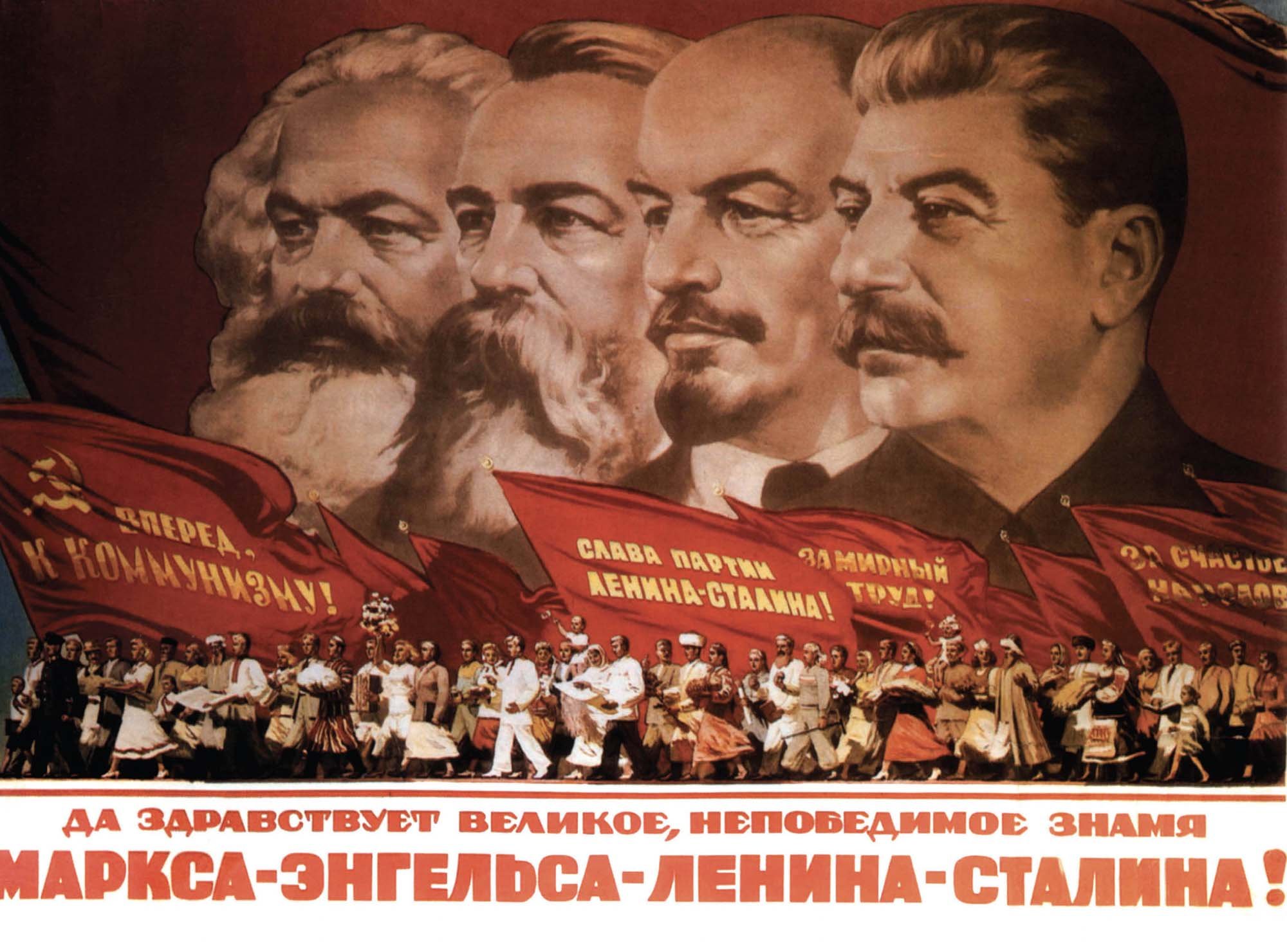
Communism sounds considerably better in an Instagram infographic than it did to many of the people who lived under authoritarian communist governments.
Here’s the historical reality with real-world consequences:
Mao's China
An estimated 20–45 million famine deaths during the Great Leap Forward.
Cambodia under Pol Pot
Approximately 1.7 million deaths through starvation, forced labor, disease and executions.
Stalin's Soviet Union
Forced collectivization, political persecution, famines and labor camps.
East Germany
Mass surveillance, restricted movement and political repression.
North Korea
Hereditary dictatorship, severe restrictions on freedom and chronic food insecurity.
Historical death tolls vary depending on methodology, but the human suffering is well documented. The important discussion is how concentrating economic and political power in the hands of an unaccountable government can produce catastrophic consequences.
Depending on your friends response to these real examples you’ll get a better idea of how far down the communist rabbit hole they have fallen. If they claim “America is just as bad” or “capitalism is worse” you will begin to see how their critical thinking skills have failed.
At this point, it will be almost impossible to convince them otherwise as they no longer see human suffering, starvation or death as things that are wrong. They will only see them as necessary for the success of the collective, a common trait amongst those who’d rather burn the entire system down rather than study for a trade job or even try to get a job themselves.
At this point they have been truly convinced that millionaire politicians and leadership within the DSA actually have their best interests at heart. It’s much easier to lie to someone like this than to convince them they have fallen for a lie.
Step 4: Open the Forbidden Book of Economics 101

Communism has a long history of marketing itself as “progressive" and “peaceful”.
No, not another Marx anthology. A basic economics textbook.
Explore concepts like supply and demand, taxation, profit margins, inflation, competition and government spending.
Consider the economics of running a small coffee shop. Between rent, electricity, payroll, insurance, equipment, taxes and supplies, there's considerably more happening behind that $6 latte than milk and bourgeois oppression.
Running a business is a little more complicated than running a subreddit, and for most Marxists the idea of running something bigger than a table at a craft market is far beyond their comprehension. Remember, they choose to get a degree in Afrikana Studies or went to a liberal arts school for a masters in puppetry. They haven’t received the basic economic education that those of us who start businesses and succeed in the greatest country in the world have.
Explore practical economic concepts that are often overlooked in political conversations:
How businesses generate revenue and create jobs.
How taxes fund government services.
How supply and demand affect housing costs.
How inflation impacts purchasing power.
How entrepreneurship and investment create wealth.
How government debt affects future generations.
How monopolies, corruption and regulatory capture undermine competition.
How public services can address market failures.
Basic economics is like kryptonite to a DSA member, so try to handle these topics with care. Explain to them that people have the right to move to other states and that the money earned by someone else isn’t there’s just because a politician says so.
Unfortunately, if you’re friend is already an unmotivated individual who can’t figure out how to survive in an economy that rewards risk, determination and merit, it will be very hard for them not to want a future where those who succeed are punished.
Step 5: Discuss the American Empire without the Cinematic Soundtrack

The DSA continues to gain ground by claiming to care about “working families”.
America isn't perfect. It has a complicated history, expensive healthcare, housing affordability problems, corruption and considerable inequality.
It also has constitutional protections, competitive elections, private property rights, religious freedom and opportunities for entrepreneurship.
Criticizing America is itself an exercise of freedoms protected by the American constitutional system. We can all agree that things can be better, but the better isn’t communism, breadlines and forced labor.
Try to show them how much America has progressed already. Gay rights, women’s rights, the abolishment of slavery, the creation of our social security programs, advances in medicine, expanded food production, the internet, advancements in cinema and entertainment.
All things that would come to a screeching halt if politicians took full control of our markets.
Discuss the difference between reforming institutions and destroying them. What would replace them? Who would govern? What protections would minorities and political dissenters have? How would leaders be removed if the revolution went terribly wrong?
Revolutions rarely come with a reliable return policy. Help them realize that revolution is more than snappy slogans like “Medicare for All” and “Tax the Rich”. It’s the work that comes after that still conserves the good we’ve done. It’s the ability to lay out a plan on how these things will be accomplished without lowering the quality and forcing doctors to work at capped salaries that will make people stop wanting to become doctors.
Hopefully your friend will realize that the solution isn’t a man with a fake smile, who fails to explain how any of his policies will work without relying on feelings over facts.
A policy can be well-intentioned and still produce undesirable consequences. Equally, a policy can have economic costs while delivering meaningful social benefits.
Encourage your friend to ask questions about the policies they are trying to force on others.
Rent Freezes
How do they affect affordability, maintenance and future housing supply? Explain to them how NYCHA housing is considered the worst managed in NYC, with billions spent to keep people in unlivable conditions. Explain that while rent may freeze, expenses don’t leaving repairs and maintenance ignored.
Free Public Transportation
How is it funded, and does service quality improve? Explain that without fares, there is less money for repairs. Encourage them to visit the worst stations in New York and spend a night in them to identify how they can be improved. Then ask how can it be done if no one pays into the system.
Higher Minimum Wages
How do they affect earnings, employment and prices? Explain that every time this has been implemented there are fewer jobs, less hours and businesses are forced to close down resulting in fewer options for everyday people.
Government-run Grocery Stores
Can they operate efficiently and sustainably when the best possible people to run them will refuse to do so? Why should people who already make a lot of money be subsidized for their groceries? Is it fair for a family that is barely surviving to be taxed more so that some rich kid living on his millionaire parents money gets 30% off eggs?
Wealth Taxes
How much revenue do they generate, and how do they affect investment? Does it make sense that the government takes 50% off all you’ve earned in your life, leaving your children with less? Why should a politician who has never built a successful company be able to decide how much you’re allowed to make?
Universal Healthcare
How do different systems balance cost, access and quality? What is the quality of healthcare in countries where this is implemented. Bring up the closest example of Canada, where people have to escape to America to get care or are forced into government suicide. Do you want the government to decide if your life is worth saving?
Step 6: Touch Grass
There is more to life than political discourse.
Regardless of someone's political beliefs, a fulfilling life might include:
Finding meaningful employment or volunteering.
Exercising and improving physical health.
Learning a marketable skill.
Building friendships outside political circles.
Exploring romantic relationships, if desired.
Developing hobbies that don't involve debating strangers.
Learning about personal finance.
Creating something they're proud of.
Not every personal accomplishment needs to be interpreted through the lens of class struggle. Sometimes a bicycle is just a bicycle. It’s important to recognize that the rise of socialism in America directly coincides with the amount of antidepressants prescribed to young people. SSRIs stunt critical thinking skills, empathy and the ability to recognize when you are being manipulated by those who don’t have your best interests at heart.
Your friend may be feeling lonely and see DSA as a place to make friends and connections. That is a key element of most cults, as well as distancing you from friends and family and convincing you that anyone who disagrees with you is the enemy. It’s very difficult to get people out of a cult once they are in, and it’s only when a person can self reflect and come to the realization they have been lied to that they are able to escape.
Step 7: Leave the Antidepressants out of the Revolution
If your friend takes SSRIs, be supportive. Some people experience emotional blunting while taking antidepressants, but depression itself can also cause similar symptoms.
Medication use doesn't explain someone's political ideology, and nobody should discontinue prescribed medication without consulting their healthcare provider.
If they're struggling emotionally, be a friend first and a political debater second.
Step 8: Introduce the Nordic Plot Twist
Denmark, Sweden, Norway and Finland are frequently presented as examples of successful socialism. They also have private businesses, wealthy entrepreneurs, stock markets, private property and competitive market economies alongside extensive welfare programs.
They represent a different approach to balancing markets and government services, not the abolition of capitalism.
Apparently, even the Scandinavian utopia needs accountants and small business owners, so if your Marxist friend brings up these countries, remind them that they are still capitalists.
Step 9: Make Room for Disagreement
Read competing economic thinkers. Explore historical documentaries. Speak with people who have lived under different political systems. Discuss the failures of capitalism alongside the failures of communist governments.
Nobody should be expected to exchange one unquestionable ideology for another.
Your friendship shouldn't depend on whether your friend eventually agrees with you about tax policy, unless of course they start to become further radicalized and begin joining groups like ISIS or studying the Qaran, which unfortunately a common end for those who lack spirituality, purpose or common sense in their lives.
People want to feel like they are part of something bigger, and nothing is bigger than ideologies which preach “Death to America”.
Step 10: Remember that your Friend is more than their Politics

Communism is never far from islamism, which is why many who push this system also praise Palestine
They're a human being with aspirations, insecurities, frustrations and potential.
You can challenge communist ideas without mocking people for being unemployed, single or struggling with their mental health (although it’s important to pay attention to when trying to figure out why an upper middle class kid living on mommy/daddy money suddenly has such an extreme political view) .
You can defend American institutions while acknowledging their shortcomings.
And you can disagree about who should own the means of production while still splitting the bill on dinner. Although, in the interest of full transparency, someone is going to have to pay for it.
Save the friendship.
Question the ideology.
Keep the conversation going. Hopefully it’s enough to save your friend from going full burqa once the people pushing such anti-American ideologies make themselves known.
