
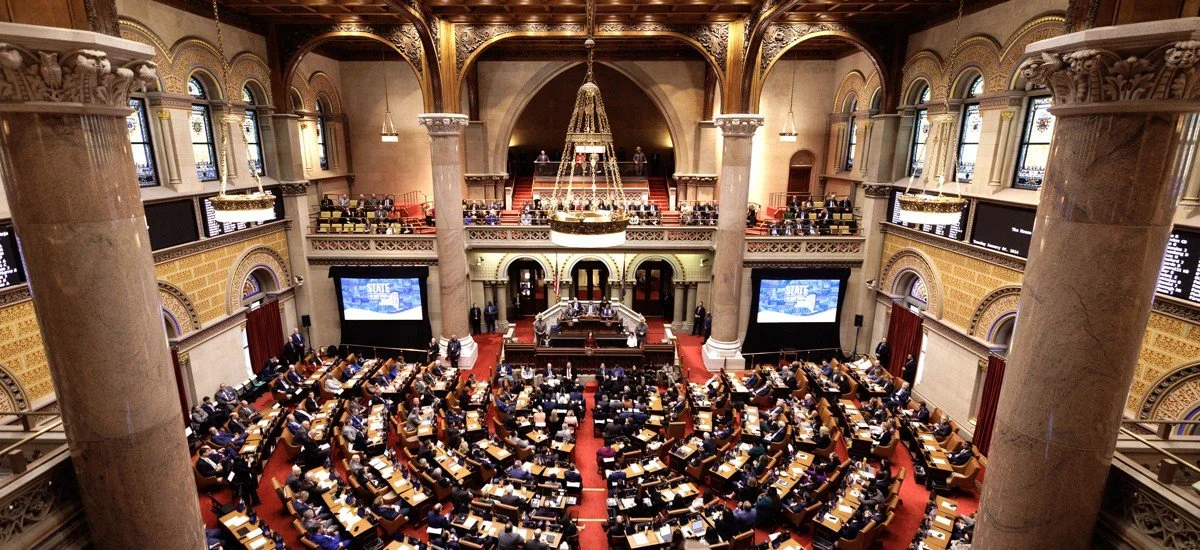
The 2026 elections highlight a lack of electoral competition across New York City, alongside several closely contested races that demonstrate how much a relatively small number of votes can matter.
New York City's political landscape is often presented as an impenetrable Democratic stronghold. But the 2026 New York State Assembly elections raise an important question: how much of that dominance reflects voter preferences, and how much reflects the absence of electoral alternatives?
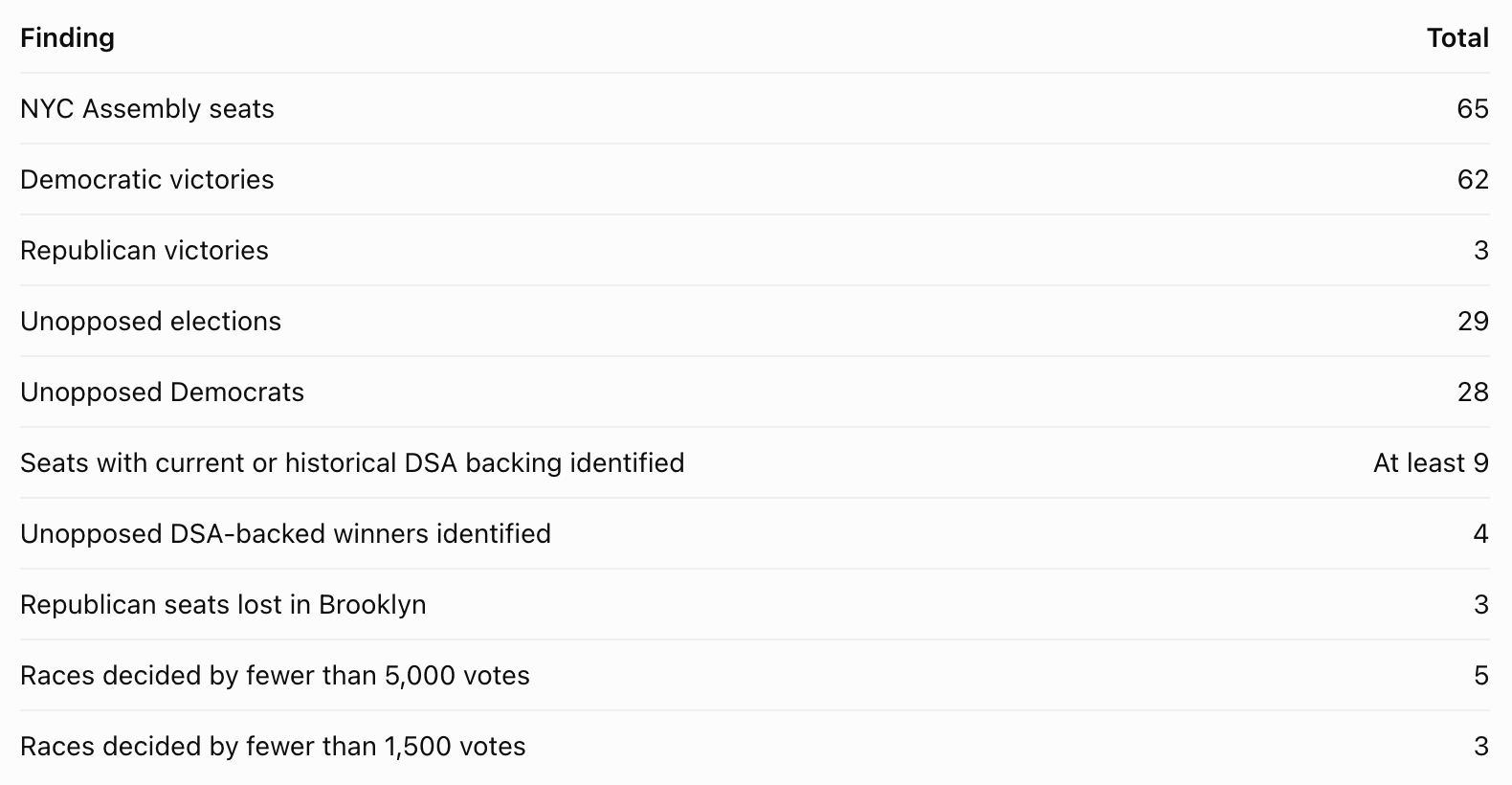
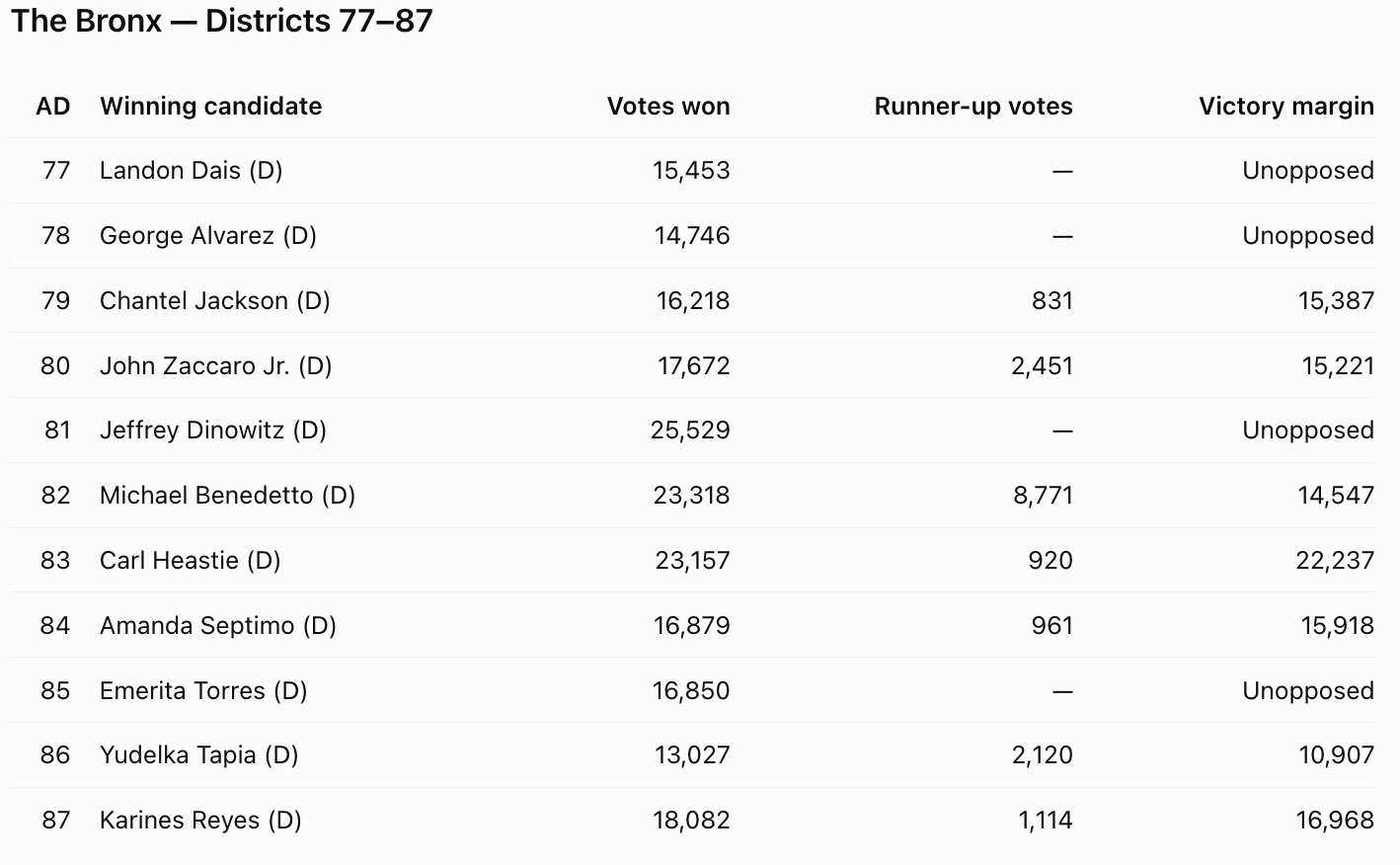
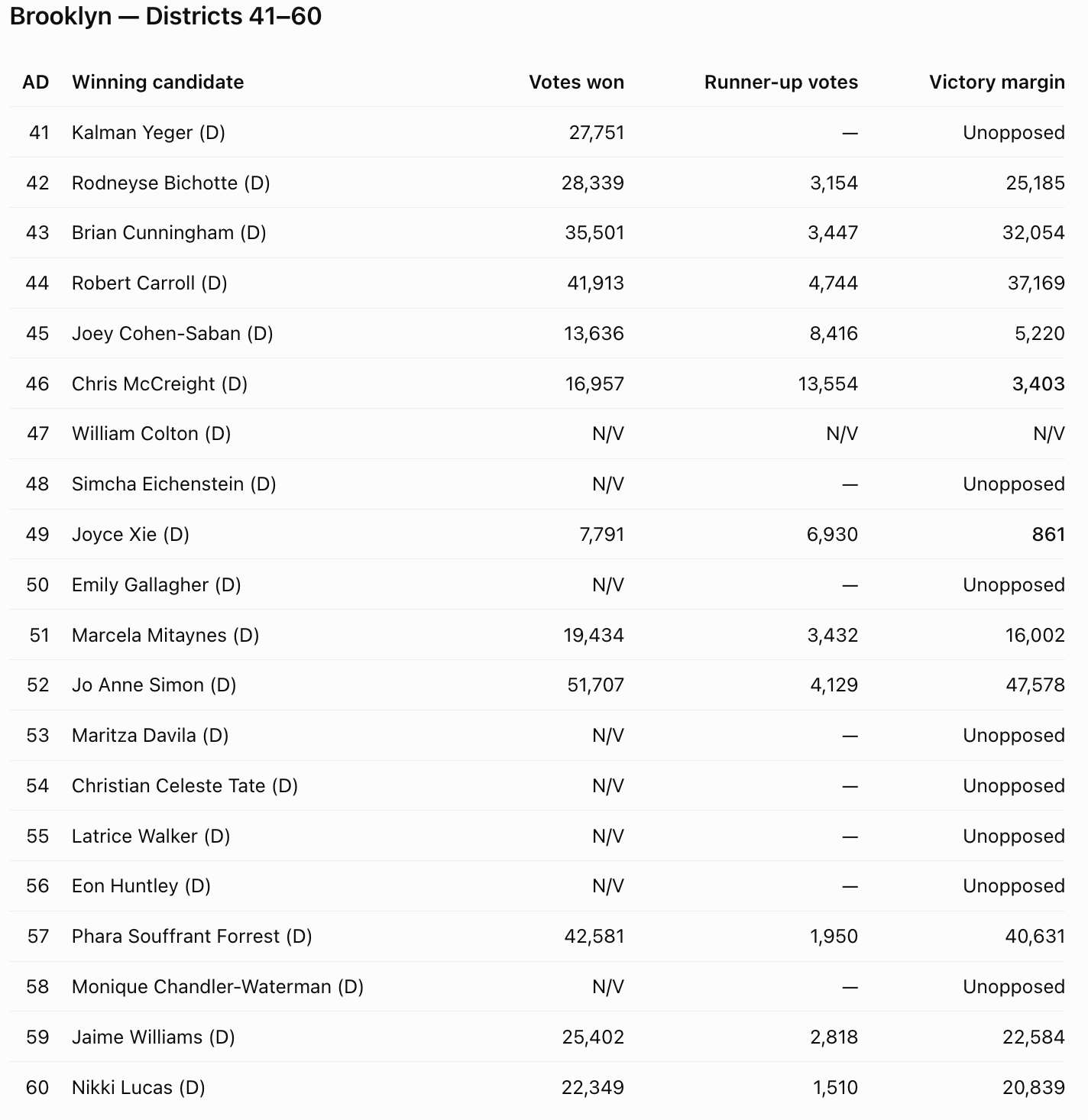
According to the preliminary election breakdown, 29 of New York City's 65 State Assembly races had no named opposition on the ballot. That's approximately 44.6% of seats where voters were not presented with a competing candidate.
Democrats secured 62 seats, while Republicans secured just three, all based in Staten Island.
Electoral competition is fundamental to a functioning democracy. Even in districts where one party enjoys overwhelming support, contested elections provide opportunities for public debate, greater accountability and scrutiny of elected officials.
The DSA's Growing Presence in Albany

DSA’s New York Assembly members including Zohran who went on to become Mayor of NYC
The Democratic Socialists of America continued expanding its influence in the New York State Legislature in 2026.
At least eight of ten DSA-backed candidates won their primaries statewide. Six of those victories were in NYC Assembly districts, and all six subsequently won their general elections.
That is in addition to established DSA-backed Assembly members such as Emily Gallagher, Marcela Mitaynes and Phara Souffrant Forrest.
At least nine NYC Assembly winners in 2026 had current or historical DSA backing:
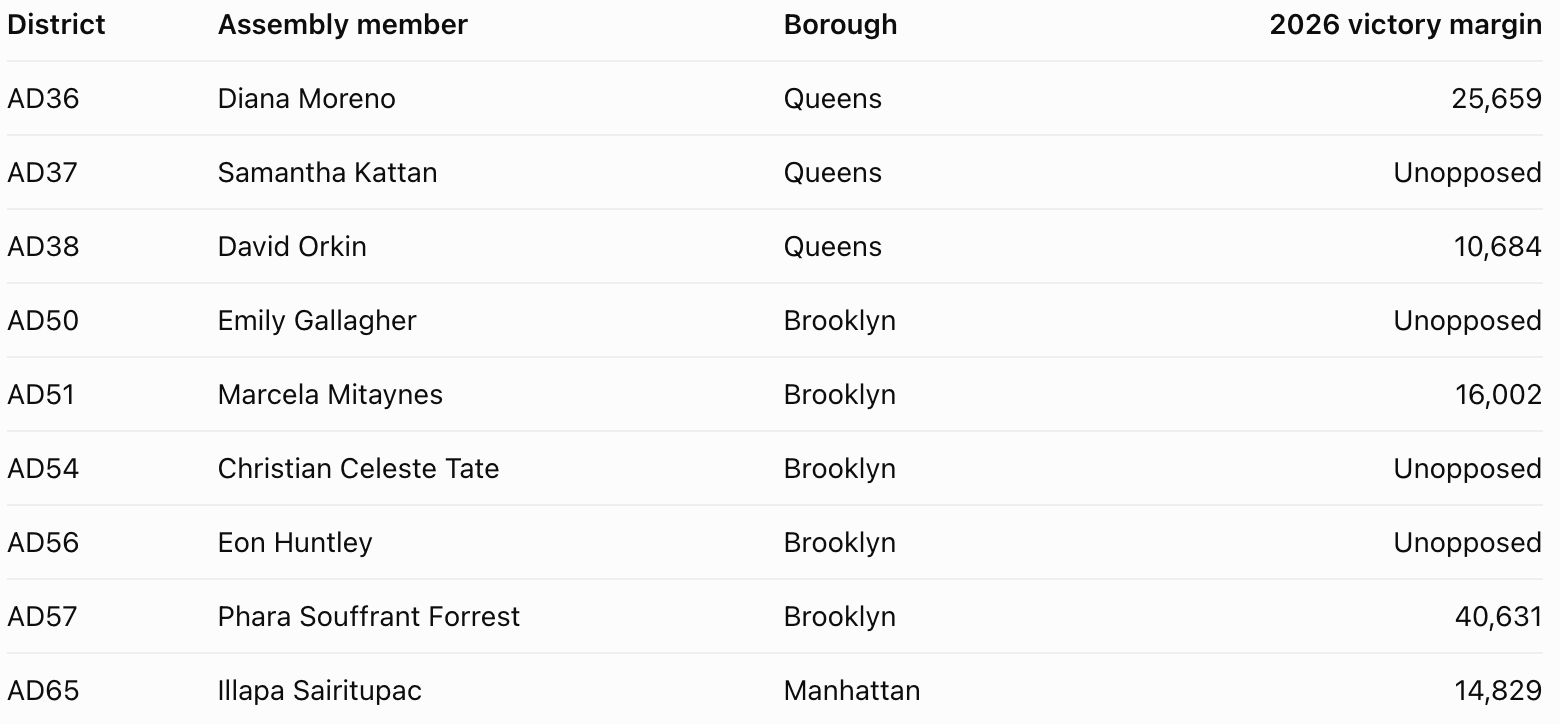
Four of these nine candidates faced no named general-election opponent, something we are planning to change before 2028.
The Seats Republicans Lost in Brooklyn
Three previously Republican-held Assembly seats in Brooklyn flipped Democratic in 2026. Their results demonstrate that political competition in New York City is not exclusively limited to Staten Island.

The three races were decided by a combined margin of just 9,484 votes.
The closest of these, Assembly District 49, was decided by fewer than 900 votes, with the Republican candidate receiving approximately 47% of the vote. These results illustrate that party control can change, particularly in districts with a recent history of competitive elections. Voters are locked into their party in districts, which means there is real opportunity to change the outcomes if we start early in connecting to voters on options.
Where New York City's Elections were Most Competitive
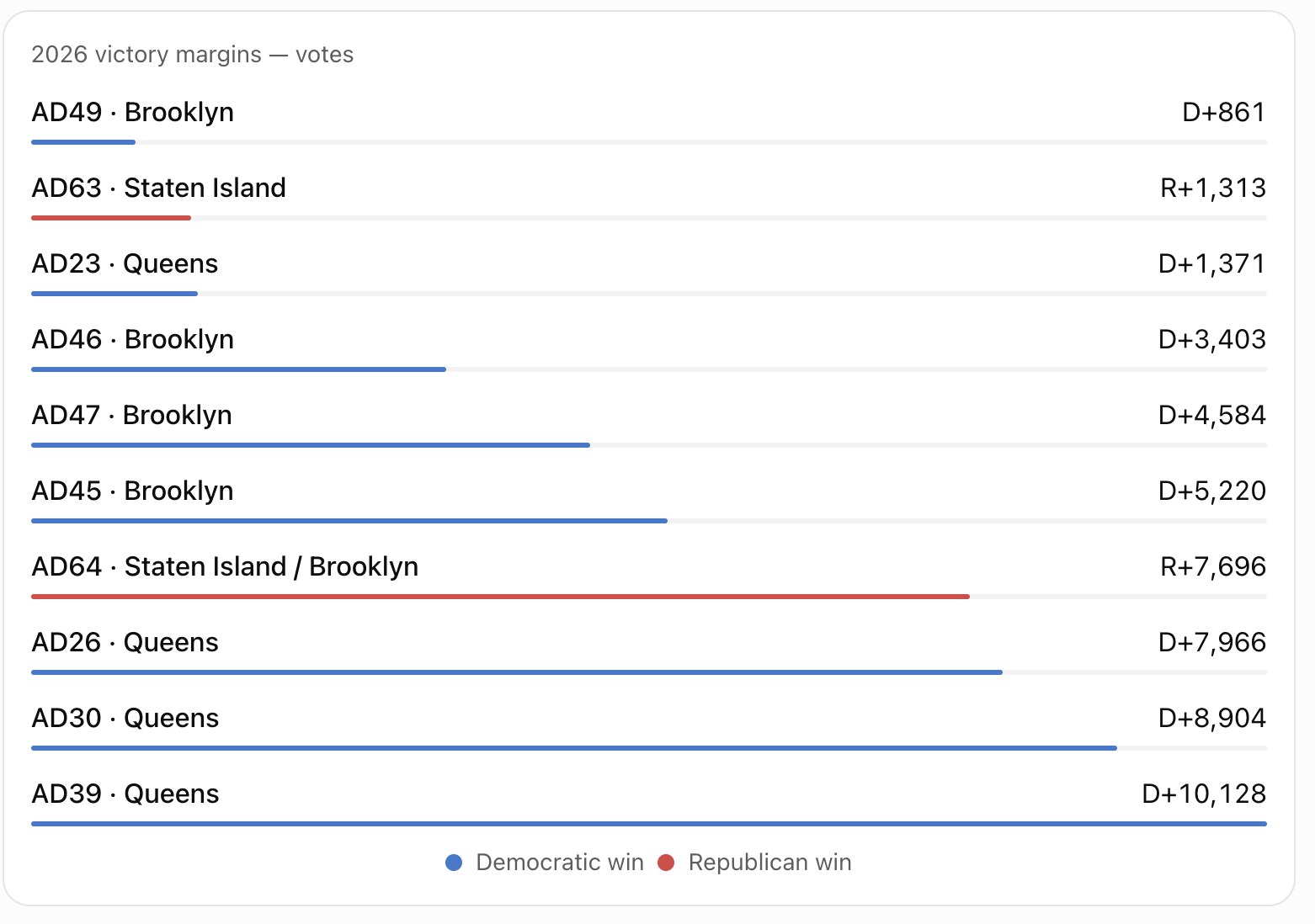
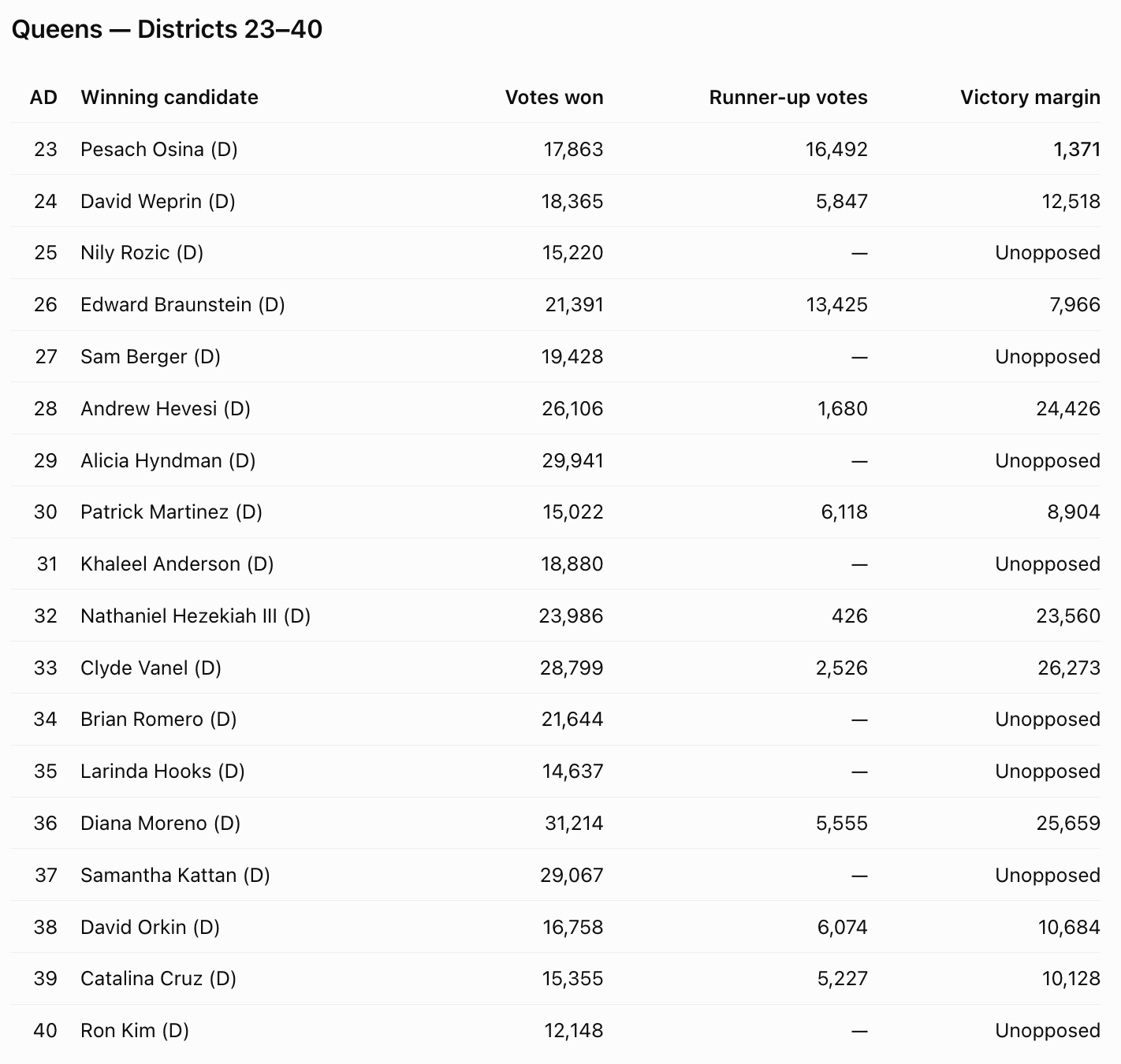
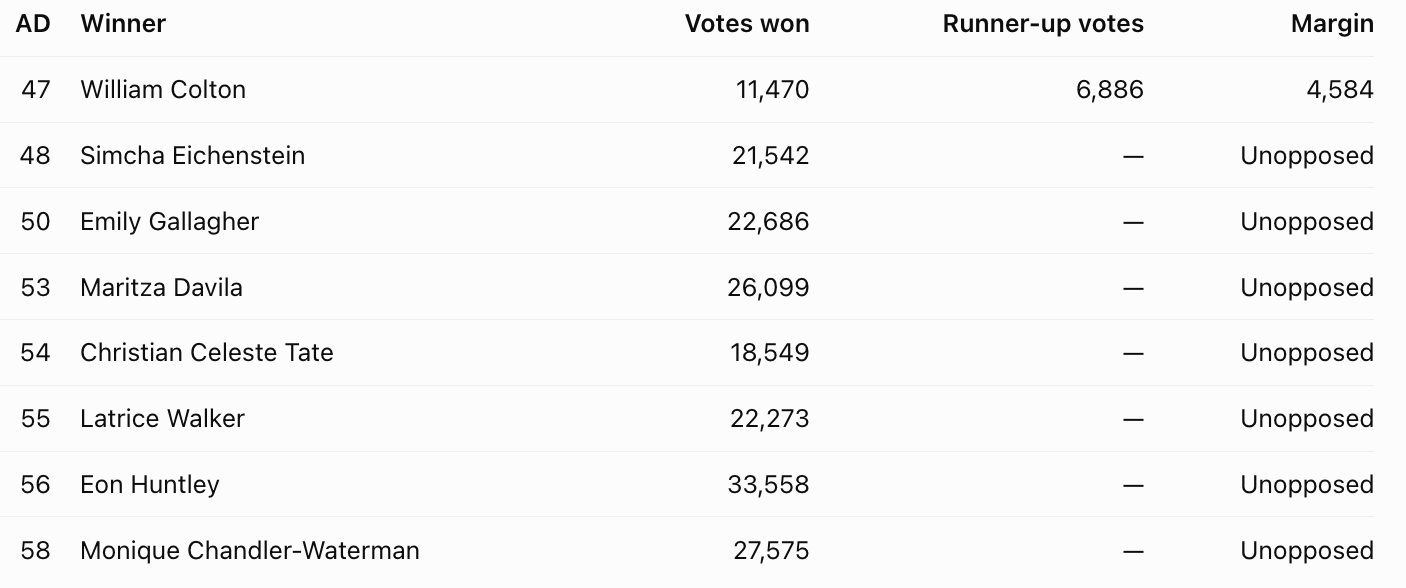
Three Assembly elections were decided by fewer than 1,500 votes. Five were decided by fewer than 5,000 votes. Turnout, candidate quality, enrollment, fundraising and changing public opinion can all affect future results, but the most important factor is marketing via social media where candidates have the most potential to reach voters and impact the outcome.
29 Seats Ran Unopposed
Perhaps the most concerning statistic from the 2026 elections is the sheer number of candidates who faced no competition on the ballot.
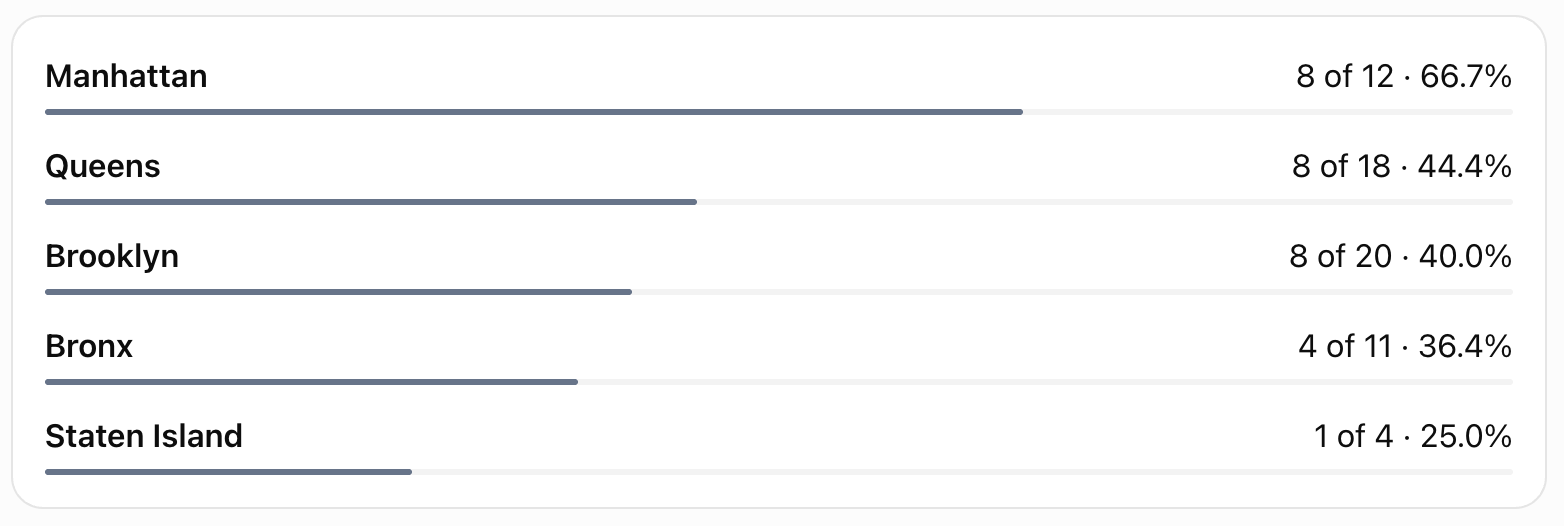
Unopposed Assembly Districts
Queens - AD25, AD27, AD29, AD31, AD34, AD35, AD37, AD40
Brooklyn - AD41, AD48, AD50, AD53, AD54, AD55, AD56, AD58
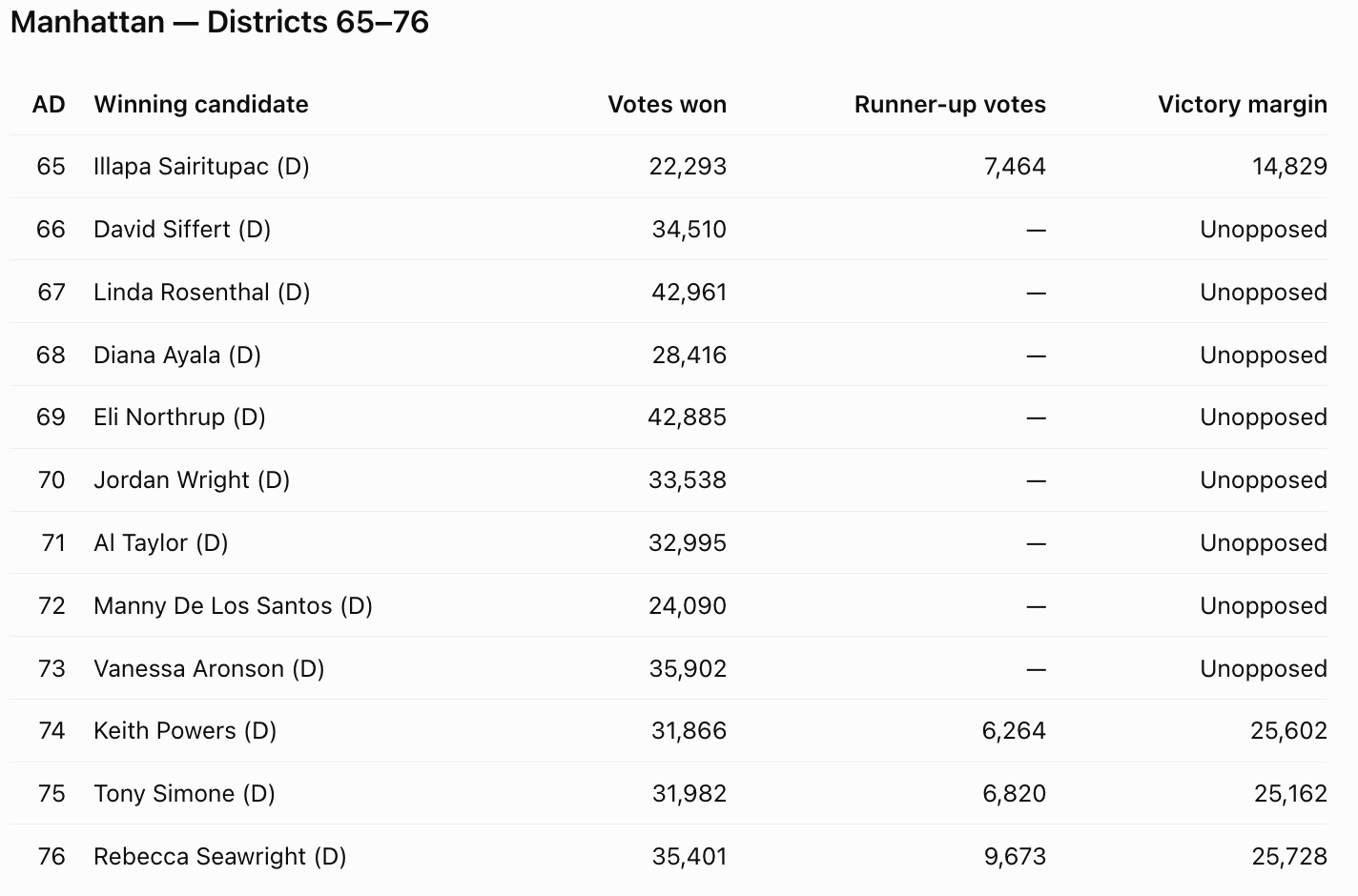
Manhattan - AD66, AD67, AD68, AD69, AD70, AD71, AD72, AD73
Bronx - AD77, AD78, AD81, AD85
Staten Island - AD62
Twenty-eight Democrats faced no named ballot opponent.
There is a significant difference between winning an election against a credible challenger and winning an election in which no challenger appears on the ballot.
Preparing for 2028

DSA’s biggest strength is running as a unit, a strategy Republicans need to utilize for 2028.
The next State Assembly election is scheduled for November 7, 2028. All 150 seats will once again be up for election.
For New Yorkers considering public office, the next two years provide an opportunity to understand the responsibilities of elected officials, become more involved in their communities and learn how the electoral process works.
Candidate development, campaign financing, public communication, media training and familiarity with local issues are all important components of a healthy, competitive electoral system.
The Anti Socialist Social Club (ANTISo) is a political advocacy organization developing a network of community leaders, digital creators, business owners and individuals interested in public service. We are here to not only motivate people to run, but to provide resources that make winning a possibility in areas where seats were taken without competition.
Key Takeaways from the 2026 Assembly Elections
Republican seats lost: AD45, AD46 and AD49 in Brooklyn.
Closest Democratic victories: AD49, AD23, AD46 and AD47.
Closest Republican victory: AD63 in Staten Island.
Highest percentage of uncontested elections: Manhattan, where two-thirds of its listed Assembly races had no opposition.
DSA-backed candidates who ran unopposed: Samantha Kattan, Emily Gallagher, Christian Celeste Tate and Eon Huntley.
The overriding lesson of the 2026 elections is that New York City suffers from a significant lack of electoral competition.
Regardless of political affiliation, New Yorkers benefit from having meaningful choices, public debates and elected officials who are accountable to their communities. Without it we see the results of one-party rule and for many of us the outcomes are too costly to bear.
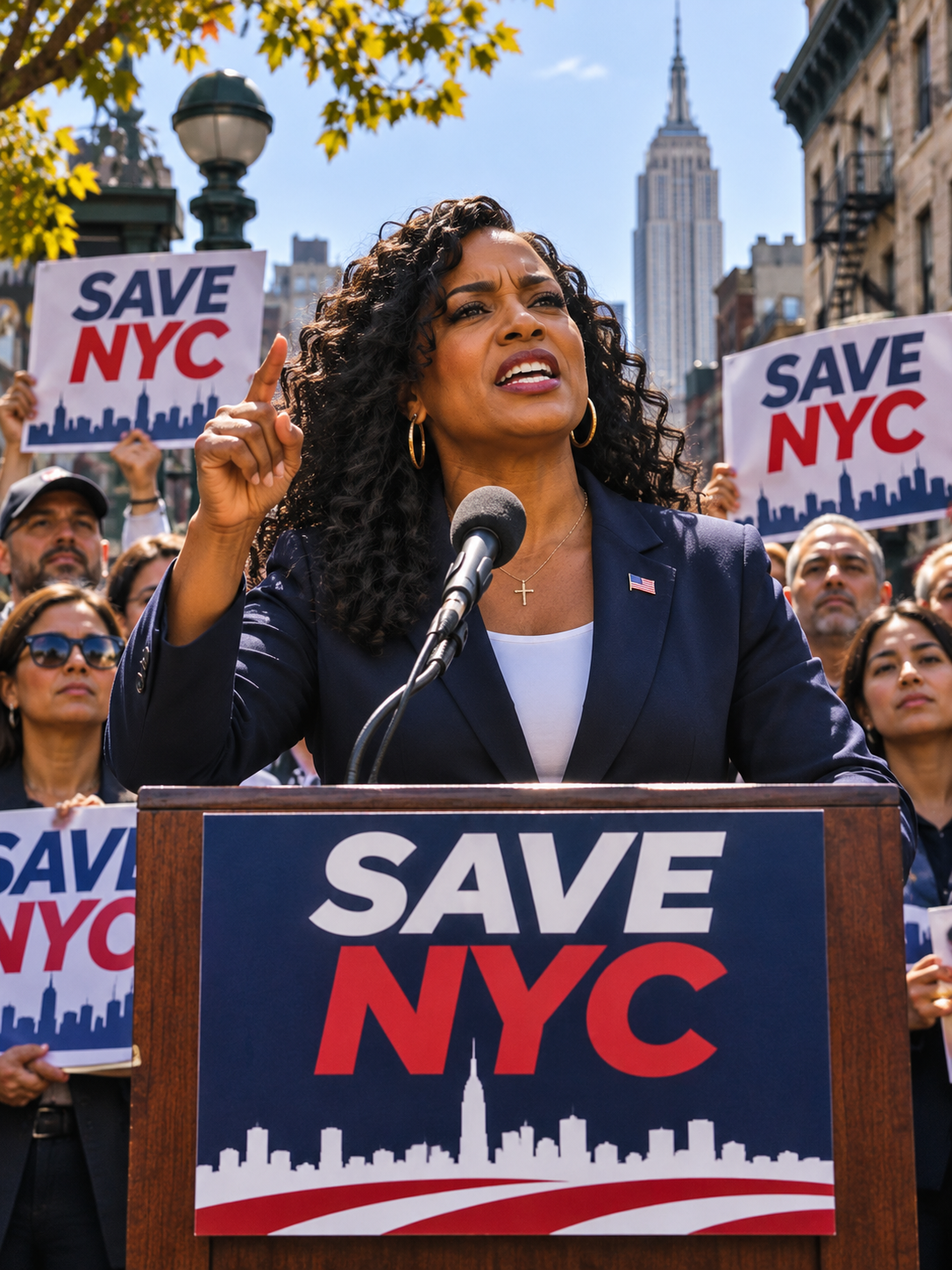
Democracy works best when voters have a choice.
Be that choice. Run for NYS Assembly in 2028.
The NYS Assembly Results in NYC
Manhattan
Queens
The Bronx
Brooklyn
Staten Island
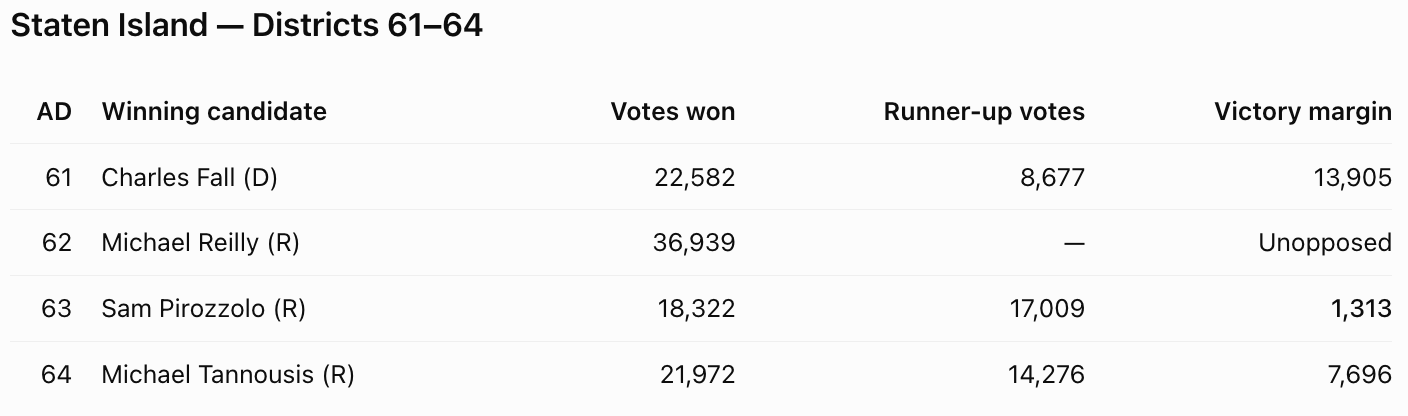
Source: November 12, 2026, unofficial election returns from Electoral Analytics and Ballotpedia's 2026 Assembly election analysis. Figures remain subject to final certification.
