
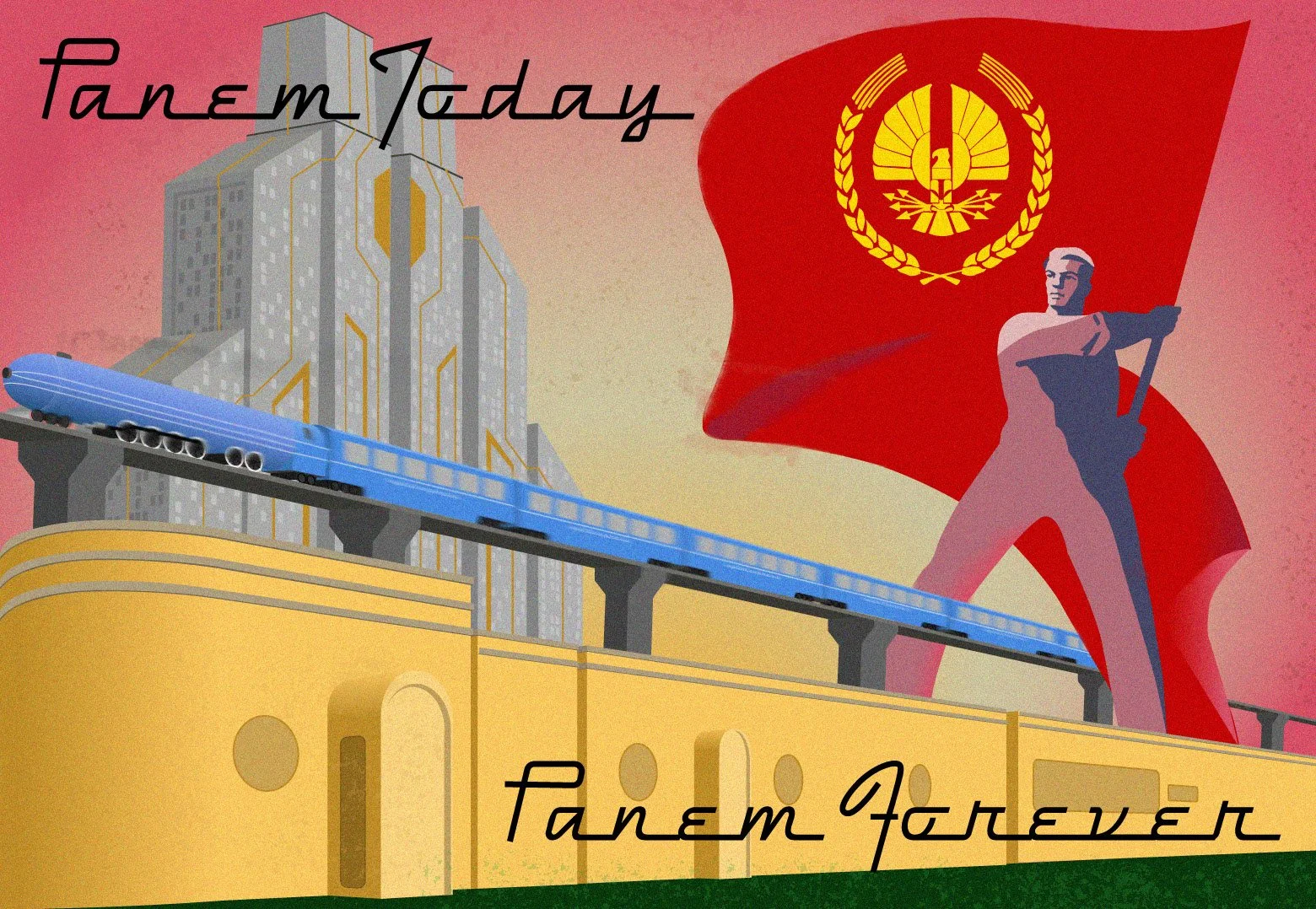
What happens when a powerful political class controls resources, restricts economic freedom, and forces ordinary citizens to depend on the state for survival?
The Hunger Games.
The fictional nation of Panem offers impossible to ignore parallels to authoritarian communist regimes, particularly the Soviet Union under Stalin, Maoist China, and current day North Korea where dissenters are assassinated, people starve and the political class remains in power through violent “games” that keep those seeking liberty are punished.

The Hunger Games gives us a glimpse into what happens when liberty is replaced with socialism.
Every Leftist who is literally illiterate thinks The Handmaiden’s Tale is about America under Trump, rather than the Islamic takeover of Iran. The same people are now trying to claim the Hunger Games is about “capitalism”, once again completely missing the point, and not seeing it as the warning for a society that gives the means of production to politicians who get to decide exactly what your life is worth.
So, here’s the breakdown on how the Hunger Games is all about socialism and the utopia promised by Marx.
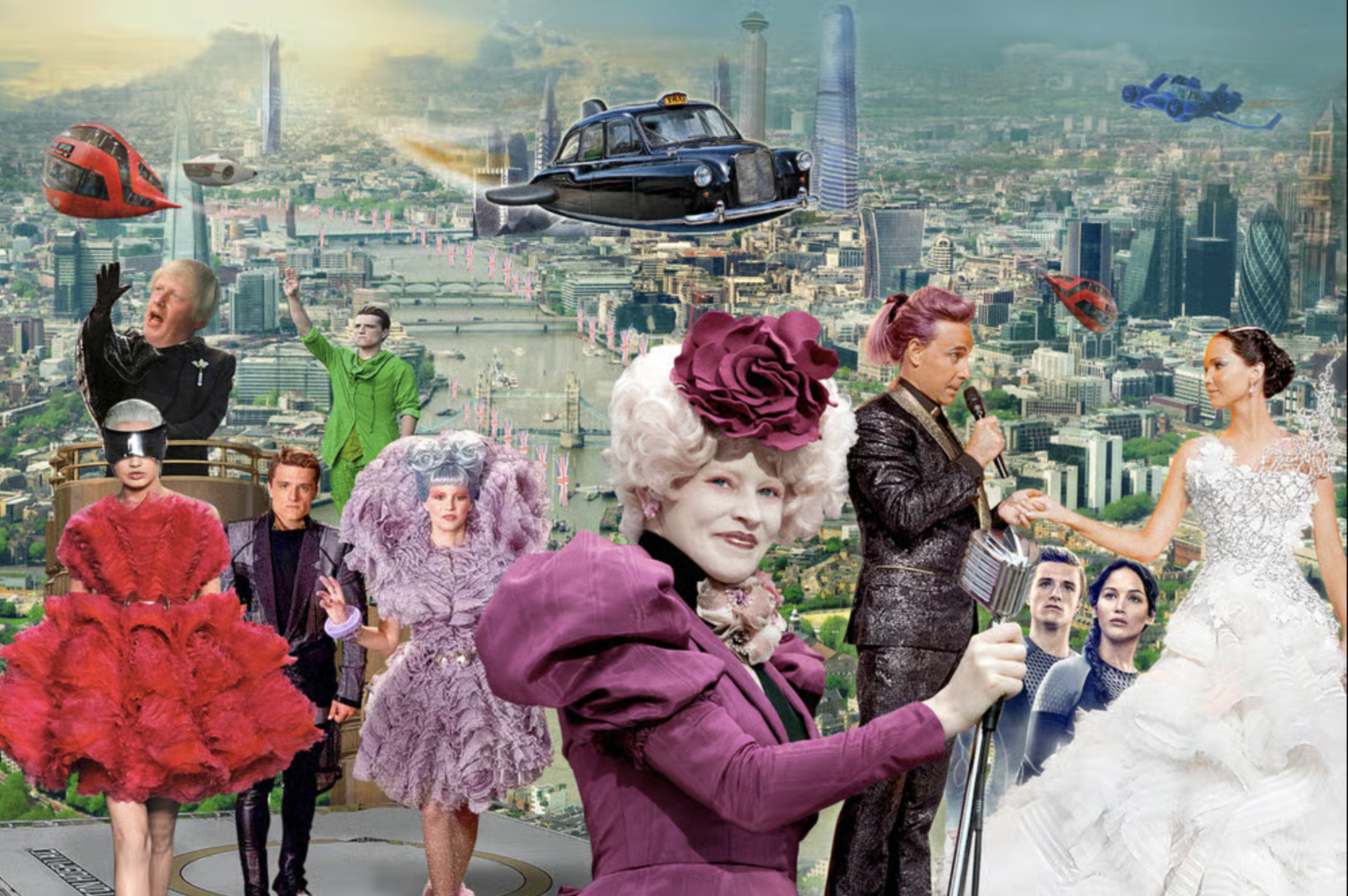
The people of the Capitol represent the elites who have taken control the media, politics and means of production
1. The Capitol: The Privileged Political Class
In Panem, the Capitol is home to the political leadership and a wealthy population living in extraordinary luxury.
While the districts struggle to survive, Capitol residents enjoy extravagant clothing, lavish parties, advanced technology, and seemingly unlimited food.
The Communist Parallel: In the Soviet Union, high-ranking Communist Party officials belonged to a privileged political class commonly called the nomenklatura. They enjoyed access to special stores, better housing, and services unavailable to ordinary citizens.
In North Korea, political loyalty and proximity to the ruling family also help determine access to privileges. The same took place in Cuba, where the ones closest to the political class enjoyed private hospitals and wealth, while everyone else worked for their benefit.
The connection is clear, the emergence of a ruling elite or the “champaign socialists”, many who come from already wealthy families and with billionaire backers, claiming to care about the people with the promise of equality, only to offer the bare minimum so that all beneath them are equally poor and unable to escape unless they entertain and kill for the ruling class.

Each district is forced to produce and the government decides who works where and what everyone gets.
2. The Districts: Workers Produce, but the Rulers Benefit
Each district specializes in producing something essential to Panem's economy: coal, agriculture, lumber, textiles, technology, or other resources.
Yet the workers who produce these goods often experience poverty and deprivation. The Capitol controls the flow of resources and receives the benefits.
The Communist Parallel: Under Stalin's collectivization policies, the Soviet government imposed agricultural production quotas and requisitioned grain, contributing to devastating famines, including the Holodomor in Ukraine.
Mao's Great Leap Forward also involved coercive production targets and state grain procurement during a catastrophic famine.
In both cases, centralized political decisions contributed to severe suffering among the people producing the nation's food.
The Hunger Games dramatizes a similar contradiction: the people doing essential work lack control over what they produce. The political class of Panem decides what work they perform, how much they receive, and distribute it equally exactly how Marx wanted.
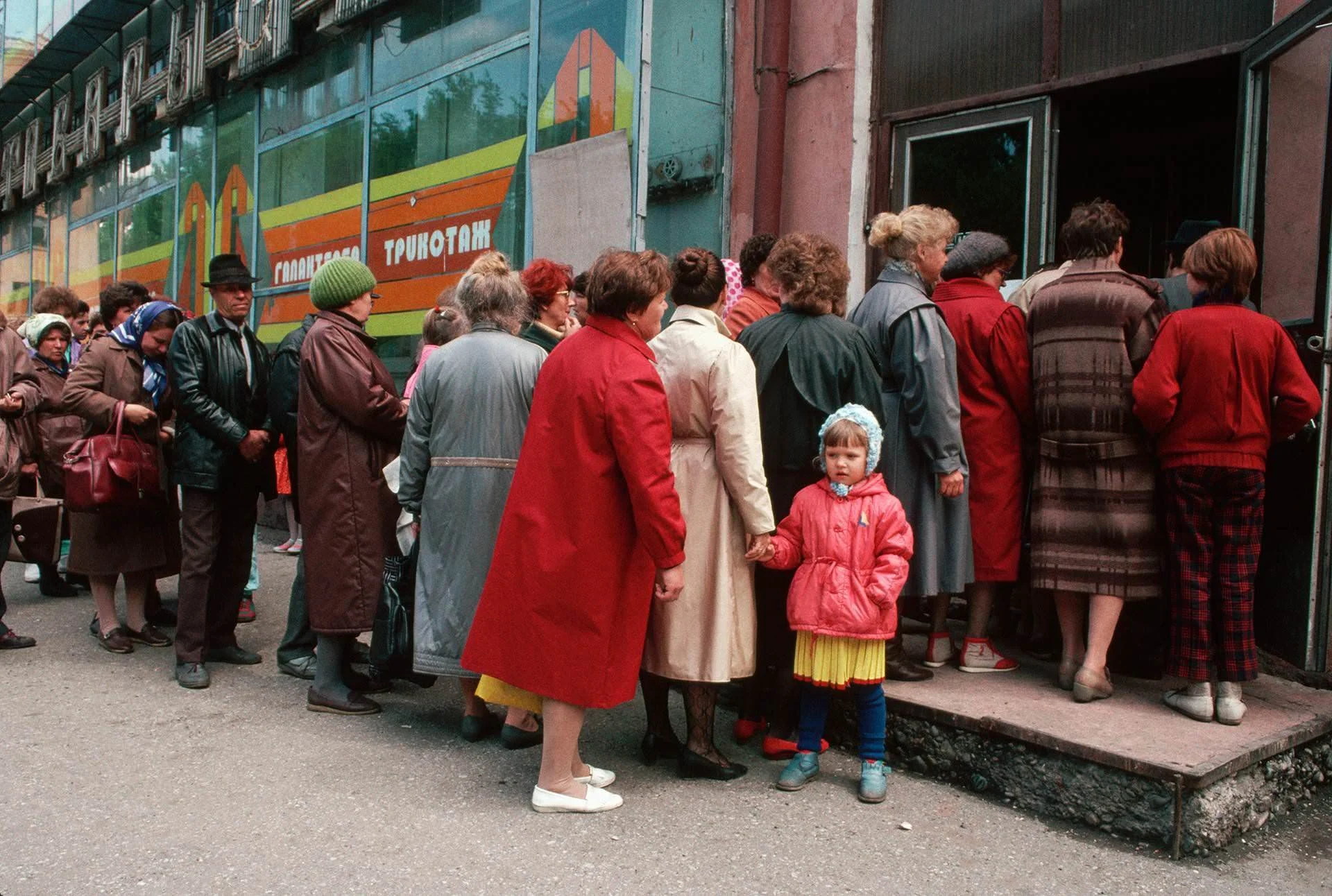
Hunger and breadlines with rationed food are common in communist nations.
3. Hunger as a Tool of Control
Food is one of the most important symbols in the story.
In District 12, Katniss hunts illegally to help feed her family. Poor children can obtain additional food rations by entering their names more times into the Hunger Games lottery through a system called tesserae.
This creates a cruel bargain: the more desperate your family is for food, the greater your risk of being selected for the Games.
The Communist Parallel: The authoritarian parallel is that governments controlling food distribution can use that dependence to enforce obedience. We saw this take place in America when the Democrats shutdown SNAP benefits and food assistance for months in order to prevent tax breaks for Americans in need.
Hunger was what they used to control the masses. Even AOC admitted this was a strategy stating “next time we just need to hurt working people and working Americans more to get them to fold” in reference to the Democratic Party being willing to sacrifice the needs of the poor to win political points.
Historical communist regimes have sometimes used rationing, confiscation, and restrictions on movement in ways that reinforced state power.

4. President Snow: Power Concentrated at the Top
President Snow controls Panem through a combination of surveillance, propaganda, intimidation, and military force.
There are no meaningful competitive elections, no independent political opposition, and no effective checks on his power. Political opponents were long silenced, executed or demonized out of existance when we enter the series.
To get there, this would mean decades of controlling the media, controlling the celebrity class, censoring critics, demonizing opposition which believed in faith, freedom or liberty, and in certain cases, killing those who spoke to loudly and got too much attention from those willing to fight against government control.
This time of all encompassing power and a destruction of checks and balances is a key element of the Democratic Socialists manifesto, which includes abolishing the Senate, packing the Supreme Court, destroying the electoral college, removing the office of President and ensuring criminals face no penalty until everyone is equally poor and under their control.
The Communist Parallel: Stalin, Mao, and the Kim dynasty all exercised extensive control through ruling-party institutions, internal security forces, censorship, and punishment of political dissent.
But Snow's rule is better understood as totalitarian than textbook communism. His primary objective is preserving his regime, not implementing a recognizable Marxist economic program, which historically is what occurs once any socialist party gets enough power.
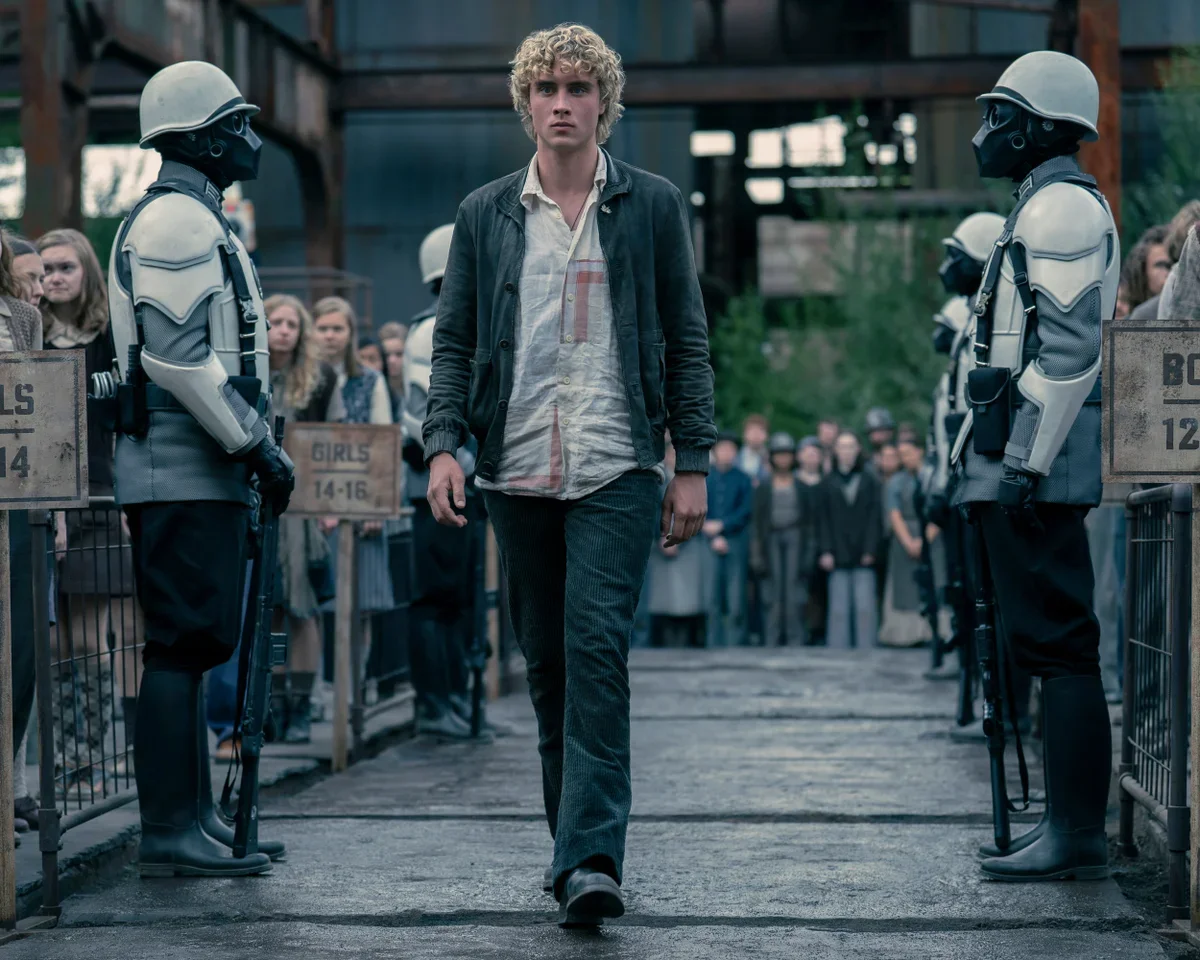
Thought policing and big brother surveillance is standard in communist regimes.
5. The Peacekeepers: Enforcing Obedience
Panem's Peacekeepers patrol the districts, suppress dissent, and enforce the Capitol's laws.
The connection is not ordinary policing. It is the use of state security forces to protect political power from citizens who lack democratic means of challenging it. It’s a force that is sometimes made up of district citizens, to ensure that the people stay divided and never plan any uprising against their authoritarian leaders at the Capitol.

The Communist Parallel: The Peacekeepers role parallels the coercive institutions used by authoritarian states, including the Soviet NKVD and East German Stasi.
Much like the socialists of today who consider themselves “peaceful” while engaging in riots and political violence which challenges democracy and attempts to strike fear in any dissenters, the Peacekeepers represent the methods in which modern communists engage in “cancel culture”, purity tests and controlling the narrative to prevent any critics from gaining too much power.
6. Propaganda: Convincing People that Oppression is Necessary

The Capitol presents the Hunger Games as a necessary reminder of a past rebellion and a means of preserving peace. The people in the districts are positioned through propaganda as the “oppressors” who are receiving just punishment for the crimes they have committed. This blanket guilt is common amongst socialist, who paint all White Cis Heterosexual Males, those they consider “rich”, or those of European decent as uniquely evil and deserving of pain for the purpose of “equity”.
The government controls the official narrative, broadcasts elaborate spectacles, and punishes challenges to its legitimacy.

The Communist Parallel: Authoritarian communist governments also used state-controlled media, censorship, personality cults, and ideological education to shape public opinion.
The common theme is the claim that harsh state control is justified by the need for collective stability. It’s the idea that one class of people are guilty, regardless of how many generations have passed since the invented crime is committed.
To the people of Panem, it’s a rebellion against the state.
To the modern day socialists, it’s the guilt of racism, slavery and Jim Crow.
In both cases, those who control the Capitol and the education system decide who’s oppressor and who’s oppressed, often times controlling the propaganda pushed to the Districts to remove their own guilt from the atrocities of the past.

It’s no surprise the Capitol is made up of “theatre kids”, much like the DSA.
7. The Capitol's Luxury versus the Districts' Poverty
This is perhaps the most visually powerful comparison.
The Capitol
Political privilege, luxury, abundance, and concentrated power.
The Districts
Scarcity, dangerous labor, restricted movement, and dependence.
The contrast resembles inequalities documented in authoritarian communist states, where ruling-party officials could enjoy privileges despite official commitments to class equality and being able to claim they care about the people more than if under a capitalist system, where liberty creates opportunity for all.

The Central Comparison
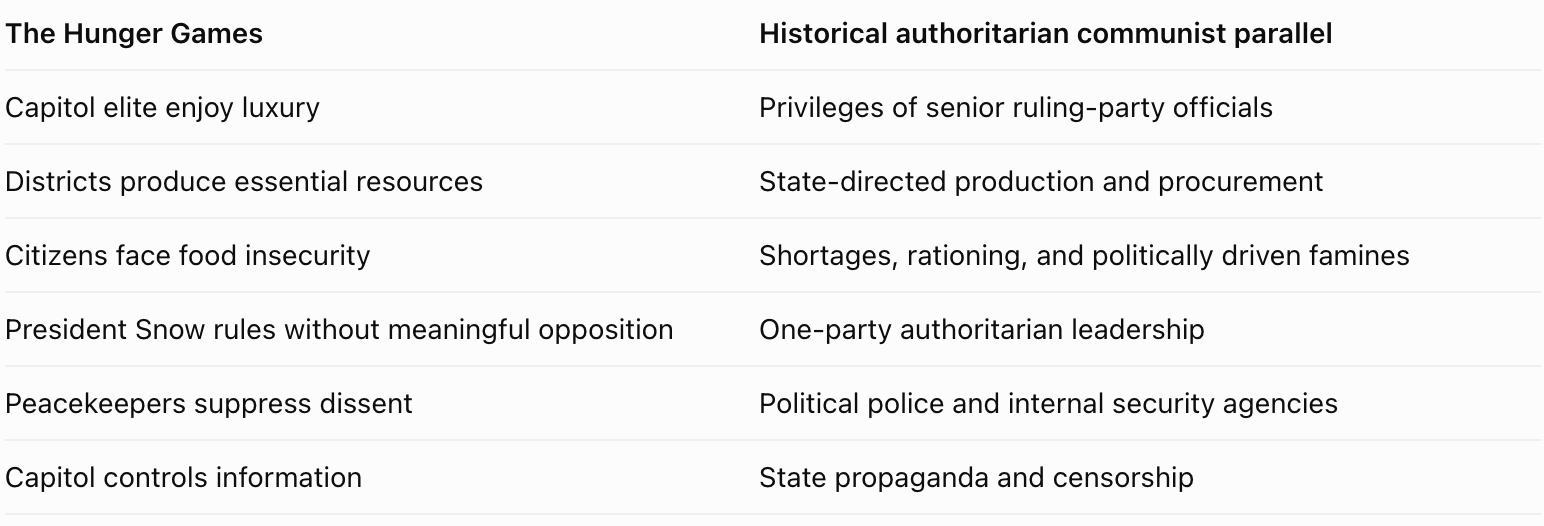
The Bigger Message
For those with media literacy, The Hunger Games can be read as a critique of a system in which the government controls production, distributes resources, suppresses political opposition, and reserves extraordinary privileges for its leadership, features that have existed in every single historical communist system.
When political leaders possess unchecked power over food, work, information, and personal freedom, the people they claim to serve can become the people they exploit.
That is what makes the Capitol and the districts such a compelling illustration of what happens every time the socialists gain enough power.
