
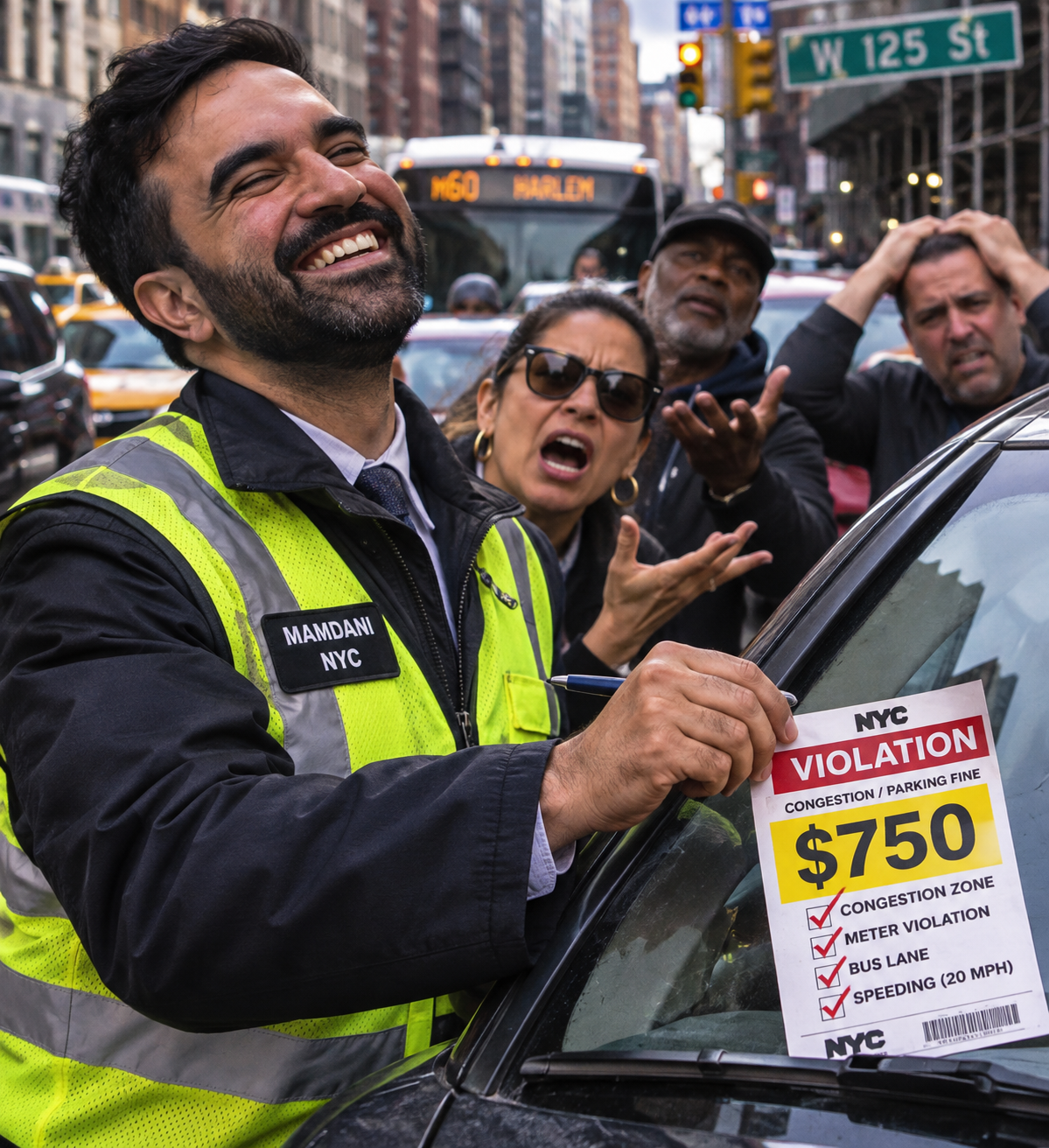
New York City is systematically redesigning its streets to prioritize public transportation over private vehicles. But as driving becomes more expensive and parking becomes harder to find, an important question emerges: Who gets to decide how New Yorkers move around their own city?
For millions of New Yorkers, owning a car represents something more than convenience.
It's the freedom to travel on their own schedule, take their children to school, visit elderly relatives, get to work outside normal commuting hours, or leave the city without depending on a train or bus.
But a growing collection of transportation policies is making that independence more expensive and, in some neighborhoods, more difficult.
Congestion pricing. Expanded parking meters. Reduced speed limits. Bus-only lanes. Bicycle infrastructure. Parking spaces replaced by garbage containers.
Individually, each policy has an explanation. Collectively, they represent a major transformation in how New York City allocates its streets and socialists long term plan to ensure the government controls how you get around.
It’s more than a war on drivers.
It’s a communist plot to make you even more dependent on the transportation the government controls.
First, Make Driving More Expensive
Congestion pricing began in January 2025 with a $9 peak-period toll for most passenger vehicles entering Manhattan's designated congestion zone.
That charge is scheduled to rise to $12 in 2028 and $15 in 2031.
For someone entering the zone on 260 chargeable commuting days annually, the toll alone would eventually reach $3,900 per year.
That's before gasoline, insurance, registration, maintenance, parking and other tolls.
And the financial pressure may not stop there.
In October 2026, NYC Transportation Commissioner Mike Flynn confirmed that the Mamdani administration was considering expanding metered parking into areas where drivers currently park for free.
The Manhattan Borough President's office has also recommended substantially expanding paid parking, suggesting that metering one-quarter of currently free spaces could generate more than $1.2 billion annually.
For residents accustomed to parking on their own streets without paying, the prospect represents another potential cost of owning a vehicle, making life in NYC way more expensive.
Then, Take Away the Parking
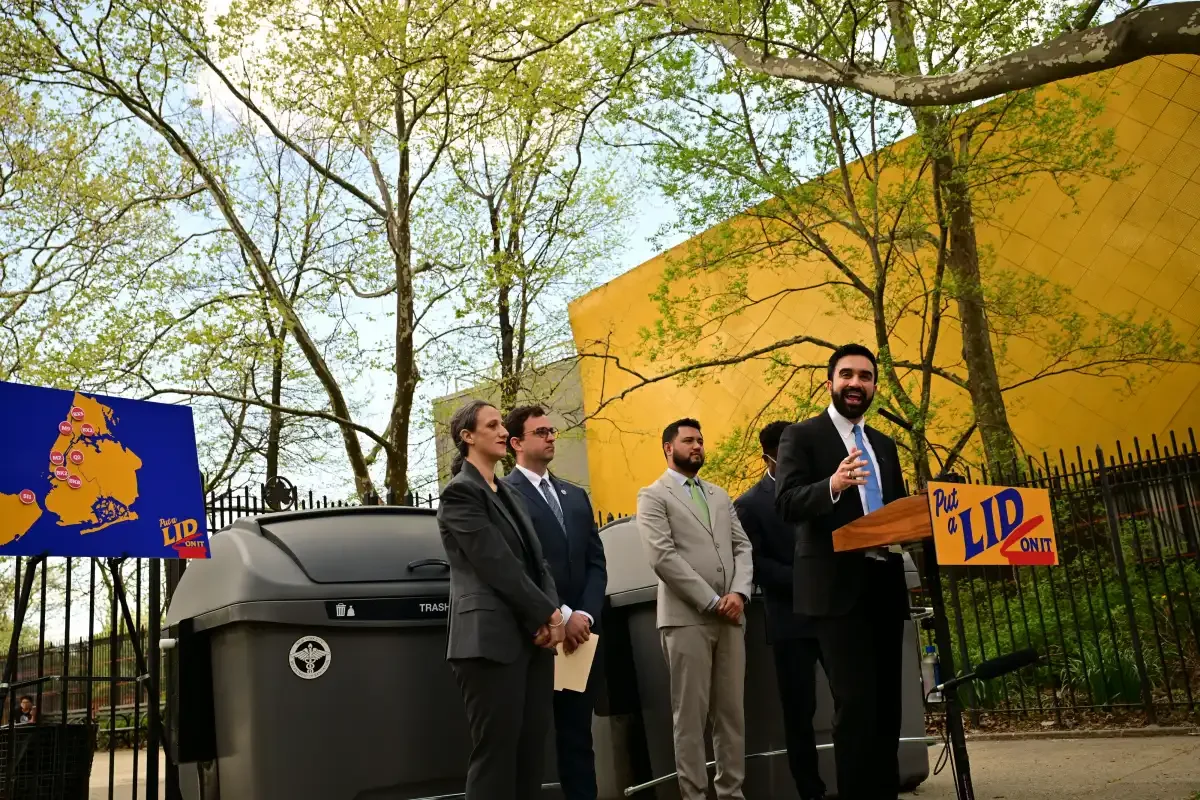
Mamdani’s new bins will remove nearly 30,000 parking spots in NYC.
New York City is also moving forward with a massive expansion of containerized garbage collection.
The claimed reasons for this initiative was to reduce rats, even though other solutions exist to handle overpopulation.
According to the city's 2026 environmental review, full implementation could occupy the equivalent of approximately 29,842 existing on-street parking spaces.
Manhattan would experience the greatest proportional impact, with an estimated 6.4% reduction in on-street parking.
Some community districts could lose approximately 10%.
That means thousands of spaces previously available to drivers could become permanent locations for municipal garbage containers.
The question isn't whether New York should have cleaner streets. It's whether the city has adequately considered the consequences for residents who depend on their vehicles.
Bus Lanes, Bike Lanes, and Fewer Choices for Drivers
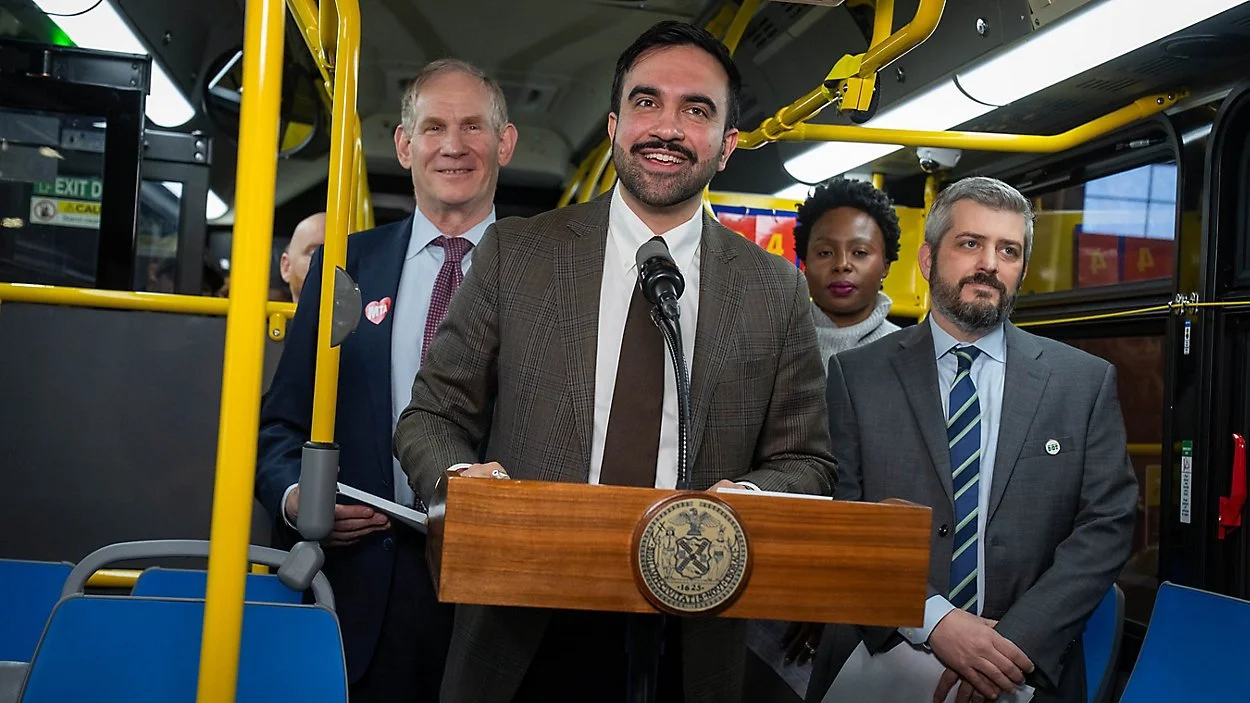
Mamdani ran on free buses, but changed to making them faster by punishing drivers.
The city is simultaneously redesigning major roadways to prioritize buses, bicycles and pedestrians.
In 2026, the Mamdani administration advanced bus-priority projects along Fordham Road in the Bronx and Madison and Lexington avenues in Manhattan.
Other proposals, including changes to Third Avenue in East Harlem, would reduce general vehicle travel lanes while adding dedicated bus and bicycle infrastructure.
For drivers, these projects mean fewer general-purpose lanes, more restricted turns, and less flexibility over where they can stop or park.
Slower Streets, More Enforcement
New York City reduced its default speed limit from 30 mph to 25 mph in 2014.
Sammy's Law subsequently expanded the city's authority to establish lower limits.
Under Mayor Mamdani, the city has accelerated the installation of 15-mph school slow zones and is considering broader reductions to 20 mph in additional neighborhoods.
The administration argues these changes will reduce crashes, injuries and deaths, but most see it as what it is, opportunities for NYC to increase ticketing for speeding.
Mamdani’s addition of more traffic cameras suggests the added penalties to drivers is the real goal. Policymakers should examine how restrictions affect travel times, commercial deliveries, emergency access and the practical needs of residents, but since the goal is to reduce the freedoms New Yorkers can enjoy while increasing costs, it’s no surprise the socialist Mayor of New York supports the plan.
Bus-mounted cameras, speed cameras and parking enforcement add another layer of regulation. For drivers, the cumulative effect is a transportation system with more rules, more potential penalties and less room for error.
Is the Goal a Car-Free City?
The debate extends beyond tolls and parking spaces.
Urban-planning movements advocating car-free streets, low-traffic neighborhoods and reduced automobile dependence have gained influence amongst Marxists.
These movements often seek to make walking, cycling and public transportation more attractive while discouraging unnecessary driving with excessive fines and restrictions.
This as an ideological preference for collective transportation over individual mobility.
A person who owns a vehicle can decide when and where to travel without depending entirely on transit schedules, routes or service availability. That freedom goes against the ideology of communists, who want bigger government and dependancy.
The People Who Still Need Cars
Not every New Yorker works in Midtown or lives near a subway station.
Some residents work overnight shifts. Others travel between boroughs, transport equipment, care for relatives, or have disabilities that make public transportation difficult.
Families with young children may also find a vehicle essential.
For these residents, driving is not necessarily a luxury or an ideological preference.
It can be a practical necessity.
Transportation policy should account for those realities instead of assuming that everyone can easily substitute a bus, subway or bicycle for a personal vehicle.
Who Controls the Streets?
The central issue is not whether New York should have better buses, safer intersections, cleaner sidewalks or protected bicycle lanes.
It should.
The issue is whether those improvements must consistently come at the expense of private transportation and reduced freedoms for a communist ideology which hinders liberty.
Every new toll, parking restriction, street redesign and speed-limit reduction changes the balance between public transit and personal vehicles.
A city can invest in public transportation without treating private vehicle owners as an enemy to be fined, controlled or eliminated.
