
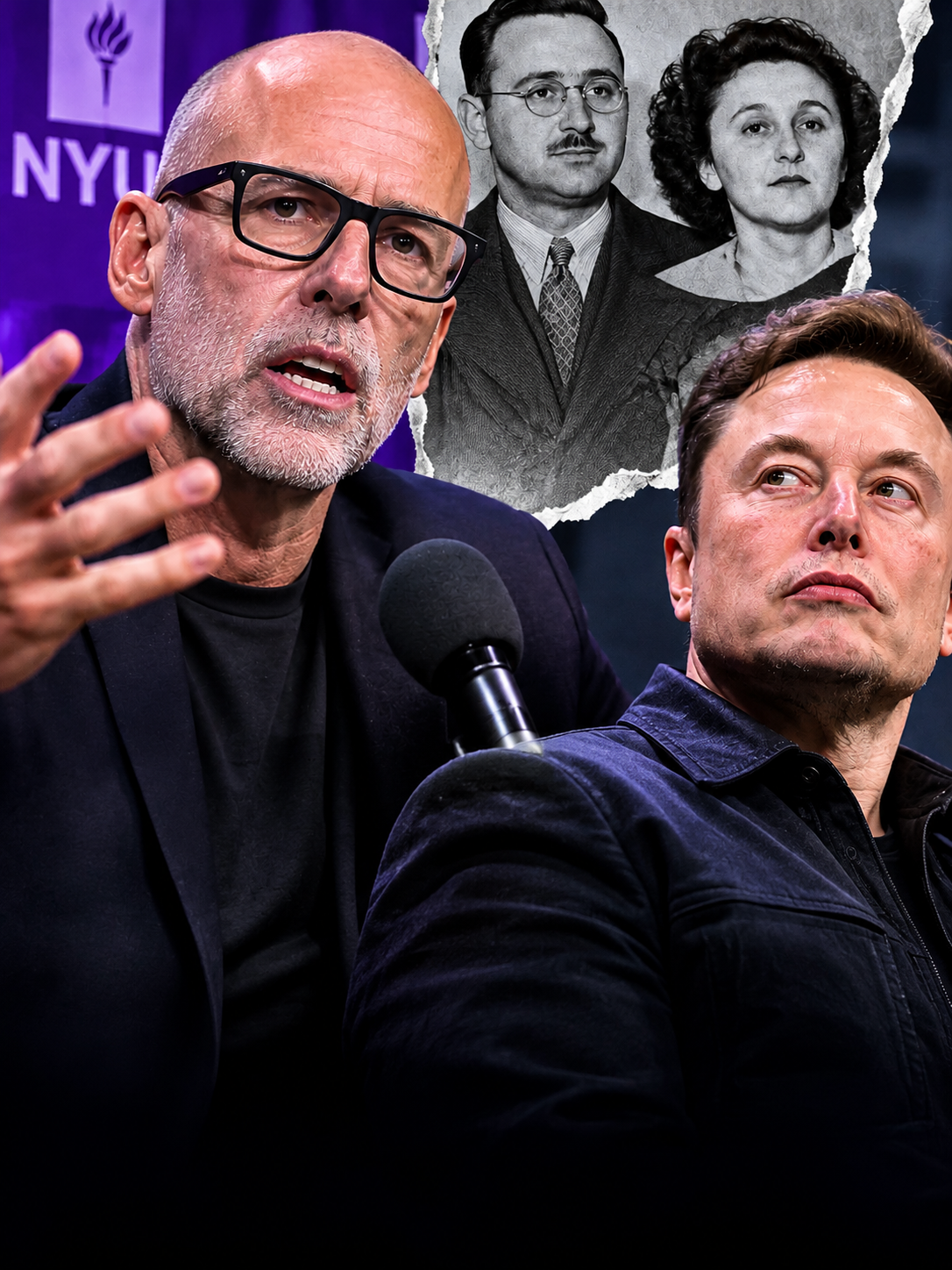
Scott Galloway, the wealthy multimillionaire entrepreneur, NYU professor, and outspoken progressive podcaster, is facing backlash after comparing Elon Musk to convicted Soviet spies who were executed by the United States during the Cold War.
Galloway, who built his own fortune through business ventures, investments, and media, took aim at Musk on his Prof G Podcast, calling the billionaire entrepreneur a "traitor to the West" over reports that SpaceX restricted Starlink capabilities used by Ukrainian forces.
But Galloway didn't stop at criticizing Musk's business decisions. He invoked Julius and Ethel Rosenberg, the infamous Soviet spies executed in 1953, suggesting Musk deserved to be judged by the same standards, put on trail and executed.
The irony is difficult to ignore. A multimillionaire progressive media personality, who has personally benefited from capitalism and the very entrepreneurial success he frequently discusses, is now comparing another successful entrepreneur to people executed for treason.
The irony is often lost on progressives, who very often should be investigated themselves for the hate and violence they release daily.
Musk has defended SpaceX's restrictions, arguing that Starlink is a civilian commercial service that was never intended to support offensive drone strikes, strikes which have resulted in the death of thousands of Russians in the ongoing war that Ukraine refuses to back down from or end.
Galloway's comments have already sparked professional consequences.
Boom Supersonic CEO Blake Scholl announced efforts to buy out Galloway's investment in the company, arguing that political disagreements should never escalate into rhetoric invoking execution and murder of one of the most innovative entrepreneurs in America.
There is a difference between criticizing a billionaire's decisions and suggesting that billionaire belongs in the same category as executed traitors.
For a progressive commentator who regularly discusses leadership, capitalism, and the dangers of concentrated power, Galloway's remarks raise an uncomfortable question: When does political criticism cross the line into dangerous rhetoric?
