
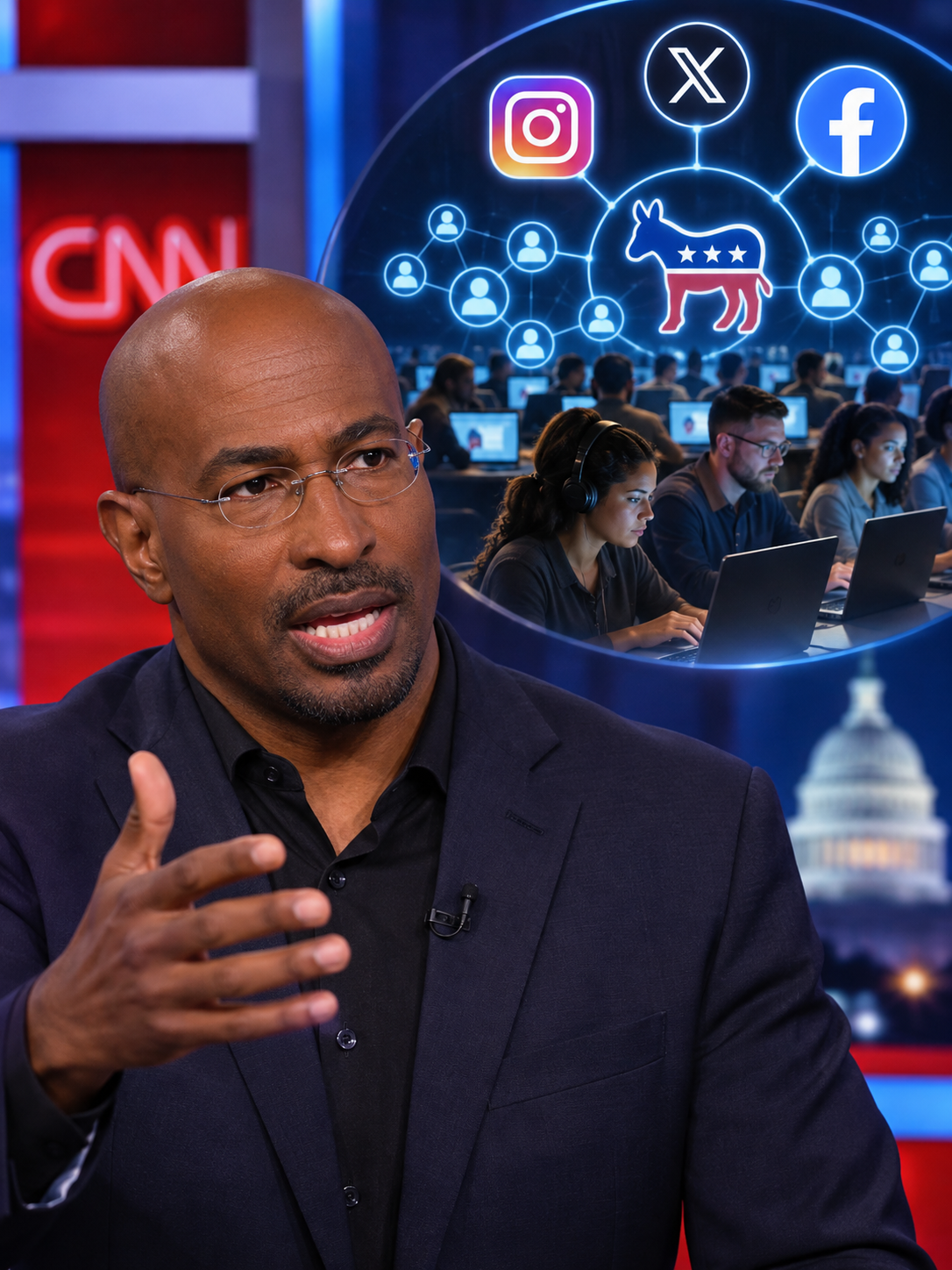
Van Jones revealed how the Democrats controlled the narrative: paid influencers with no disclaimers
Democratic strategist and CNN commentator Van Jones revealed that Democrats quietly mobilized tens of thousands of real people through a coordinated digital operation known as the American Accountability Network, designed to dominate online political conversations and make affordability the defining issue of the election.
Speaking with CNN's Kaitlan Collins, Jones boasted that Republicans never realized what was happening behind the scenes.
"The Republicans never figured out what we were doing," Jones declared.
According to Jones, the network coordinated tens of thousands of online participants—not bots—to amplify messaging about grocery prices, gas prices, and healthcare costs while connecting those issues to Democratic candidates.
Jones claimed the operation generated staggering daily reach:
32.5 million Instagram hits
88.8 million hits on X (formerly Twitter)
185 million Facebook hits
That's more than 306 million reported daily hits across three major platforms, although Jones did not clarify whether those figures represented unique users, impressions, or other engagement metrics.
The strategy wasn't simply to promote affordability. Jones explained that the network deliberately connected economic frustrations to Republicans negatively while positioning Democrats as the solution.
"They couldn't get any traction on these cultural war issues anymore because we figured out how to get around all that," Jones said.
Perhaps most striking was Jones's admission that the operation had remained largely unknown throughout the election cycle.
"The most effective online organizing campaign called the American Accountability Network flew under the radar screen, never been told before."
Jones said he had received permission to disclose the operation and confirmed that the network would continue working to influence conversations about economic issues and hold Democratic lawmakers accountable.
The revelation raises questions about just how much of the political conversation Americans encounter online is spontaneous public sentiment—and how much is the result of sophisticated, coordinated political organizing.
While Jones emphasized that the participants were real people rather than automated accounts, his comments offer a rare glimpse into the scale of organized digital messaging behind modern political campaigns.
The takeaway: Republicans were fighting over the headlines while Democrats, according to Jones, were quietly organizing the conversations happening underneath them.
